
GCSE Combined Science (AQA)
622 videos | 38 hours
Please subscribe to watch this video.
This, and all other videos, are included in our premium subscriptions.
Premium accounts get access to all videos.
Enable autoplay to keep watching
Your browser is blocking videos from playing automatically. To turn it back on:
Safari (Mac): Click the Safari menu item in the top bar, then Settings → Websites → Auto-Play, then set Auto-Play to Allow All Auto-Play for the current website.
Safari (iPhone/iPad): open the Settings app, then Apps → Safari → Auto-Play, and select Allow All Auto-Play.
Xylem
- Xylem tissue is located in the roots, stem, and leaves of plants, forming part of the transport system.
- A diagram shows a cross-section of a stem with xylem tissue in red, distributed in bundles.
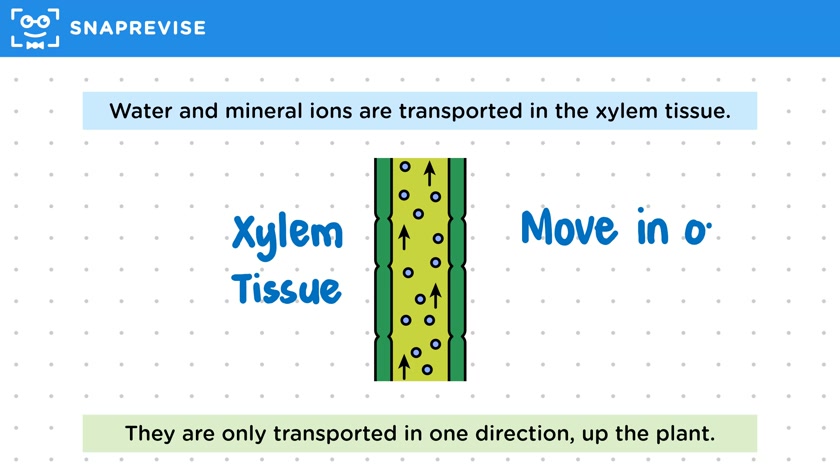
- Water and mineral ions, such as magnesium, are absorbed from the soil into the plant through the roots.
- These substances are transported upwards for use in photosynthesis and growth.
- Xylem tissue transports water and minerals in one direction, from the roots to the stems and leaves.
- Xylem is composed of dead cells that have lost their end walls, creating a hollow tube structure.
- The cells are reinforced with lignin, a stiff and strong polymer, which is the main component of wood.
- This structure allows the xylem to efficiently transport water and minerals up the plant.
- For exams, it's important to understand that xylem is a lignin-strengthened hollow tube that facilitates upward water movement.
Please subscribe to access these revision notes.
This, and all other video notes, are included in our premium subscriptions.
Premium accounts get access to all videos and revision notes.
135
questions for Cell Biology
17
questions for Cell Structure