

Elizabethan England Topic Summaries
Social structure 1588 England
GCSE
>
History
>
WJEC
>
GCSE History: Elizabethan England (1558-1603)
>
Elizabeth’s accession
>
Social structure 1588 England
Elizabeth’s accession
- - Social structure 1588 England
- - Elizabeth I’s background
- - Elizabeth I’s character strengths
- - The coronation of Elizabeth I
- - Elizabeth’s legitimacy and early challenges
- - Government structure
- - Life at court
- - The Privy Council
- - Profile: William Cecil, 1st Baron Burghley
- - Profile: Robert Cecil, 1st Earl of Salisbury
- - Profile: Francis Walsingham
- - Profile: Robert Dudley, 1st Earl of Leicester
- - Profile: Robert Devereux, 2nd Earl of Essex
- - Profile: Thomas Howard, 4th Duke of Norfolk
- - Factions, allies, and rivalries in the Privy Council
- - The Puritans and Parliament
- - Propaganda and royal image
- - The question of marriage
- - The question of succession
- - Challenges at home and abroad
- - Essex’s rebellion
Elizabethan life and culture
- - The golden age
- - Growing prosperity and the rise of the gentry
- - The role of the theatre
- - Education
- - Family life
- - Sport, art, and other pastimes
- - Puritan opposition to ‘Merry England'
- - Persecution of witches
- - Socio-economic status
- - Reasons for increased poverty and vagabondage
- - Responses to poverty
Religious challenges and plots
Imperial ambitions
Conflict with Spain
Elizabeth’s accession
- - Social structure 1588 England
- - Elizabeth I’s background
- - Elizabeth I’s character strengths
- - The coronation of Elizabeth I
- - Elizabeth’s legitimacy and early challenges
- - Government structure
- - Life at court
- - The Privy Council
- - Profile: William Cecil, 1st Baron Burghley
- - Profile: Robert Cecil, 1st Earl of Salisbury
- - Profile: Francis Walsingham
- - Profile: Robert Dudley, 1st Earl of Leicester
- - Profile: Robert Devereux, 2nd Earl of Essex
- - Profile: Thomas Howard, 4th Duke of Norfolk
- - Factions, allies, and rivalries in the Privy Council
- - The Puritans and Parliament
- - Propaganda and royal image
- - The question of marriage
- - The question of succession
- - Challenges at home and abroad
- - Essex’s rebellion
Elizabethan life and culture
- - The golden age
- - Growing prosperity and the rise of the gentry
- - The role of the theatre
- - Education
- - Family life
- - Sport, art, and other pastimes
- - Puritan opposition to ‘Merry England'
- - Persecution of witches
- - Socio-economic status
- - Reasons for increased poverty and vagabondage
- - Responses to poverty
Religious challenges and plots
Imperial ambitions
Conflict with Spain
- Before covering Queen Elizabeth I’s reign, it’s important to understand the society in which she came to power.
- England in 1558 was strictly hierarchical and based on status, wealth, and land ownership. The monarch stood at the top of society, followed by the nobility, gentry, yeomen, labourers, and the poor. The Great Chain of Being reinforced the belief that God had ordained each person’s place in society.
- The nobility consisted of powerful landowners such as dukes and earls who often held important political positions.
- The gentry included wealthy landowners like knights and gentlemen who governed local areas and served as Justices of the Peace.
- Yeomen were prosperous farmers who owned their land and formed the backbone of the rural economy.
- Labourers and servants worked for wages and had little political influence.
- The poor relied on charity or parish support, especially during periods of food shortages.
- Social mobility was limited but possible through education, royal service, or marriage.
- Economic conditions:
- England’s economy was primarily agricultural, with most people working on the land, and 90% of the population living in the countryside. However, food shortages occurred during years with poor harvests, leading to social unrest and suffering.
- Trade was growing, particularly in textiles with wool cloth making up 90% of exports.
- There was a hierarchy of professions with expectations of obedience and fealty.
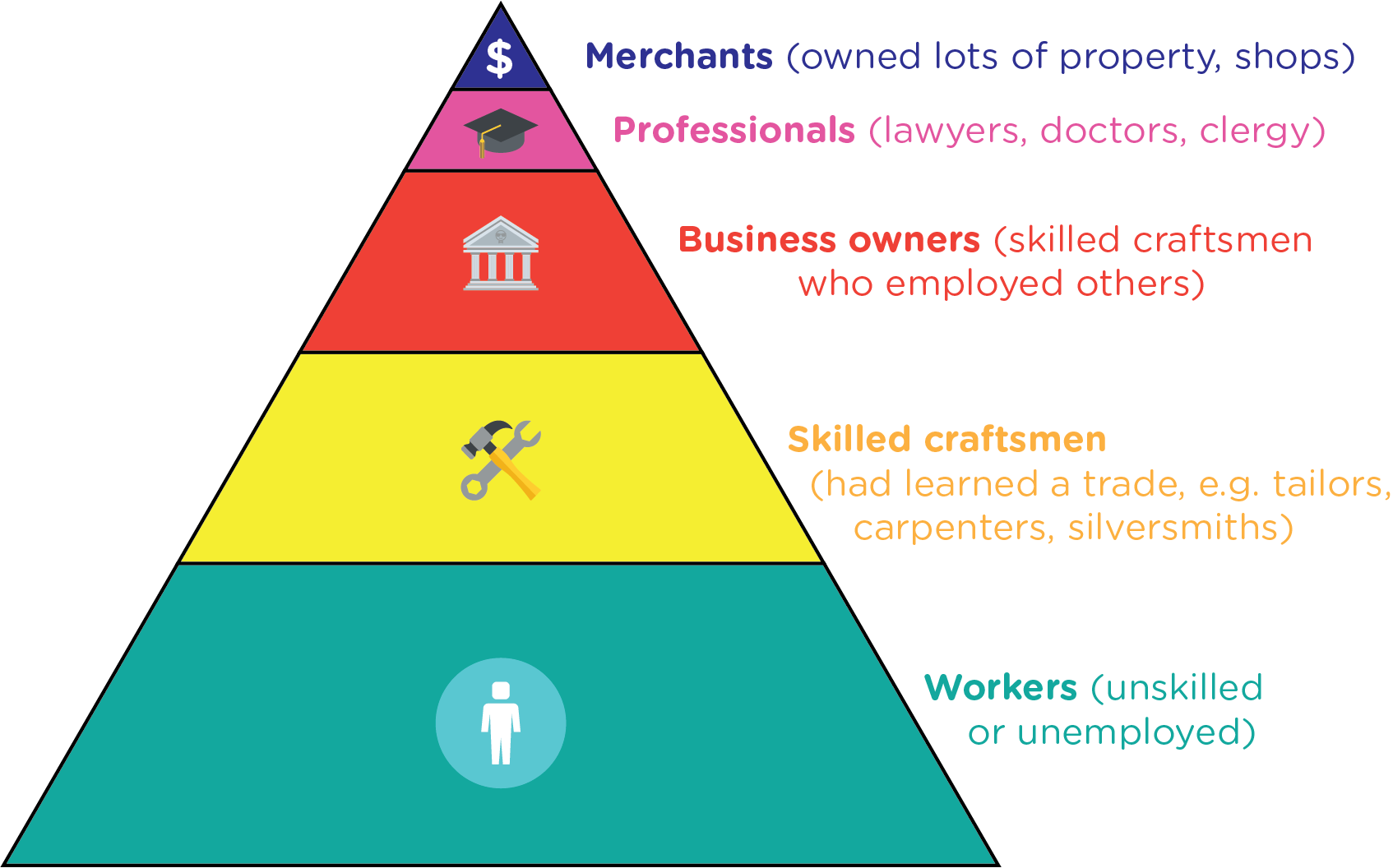
Unlock Social structure 1588 England
Subscribe to SnapRevise+ to get immediate access to the rest of this resource.
Premium accounts get immediate access to this resource.