
GCSE Physics (AQA)
346 videos | 23 hours
Please subscribe to watch this video.
This, and all other videos, are included in our premium subscriptions.
Premium accounts get access to all videos.
Enable autoplay to keep watching
Your browser is blocking videos from playing automatically. To turn it back on:
Safari (Mac): Click the Safari menu item in the top bar, then Settings → Websites → Auto-Play, then set Auto-Play to Allow All Auto-Play for the current website.
Safari (iPhone/iPad): open the Settings app, then Apps → Safari → Auto-Play, and select Allow All Auto-Play.
Evidence for the Big Bang Theory
- Theories about the universe's origin include the Big Bang Theory and the steady state universe.
- The Big Bang Theory suggests the universe started from a single point and expanded.
- The steady state universe theory posits no beginning or end, with constant matter creation and destruction.
- Scientific evidence supports the Big Bang Theory as the most accepted explanation.
- Acceptance of scientific ideas requires thorough research, experimental evidence, and peer review.
- Evidence for the Big Bang Theory includes observations of Redshift from distant galaxies.
- Redshift indicates galaxies are moving away, with light stretching and wavelengths increasing.
- Most galaxies appear to be moving away, with some anomalies moving towards us.
- Further galaxies move faster, indicated by stronger Redshift effects.
- The universe is expanding, with galaxies moving away from each other.
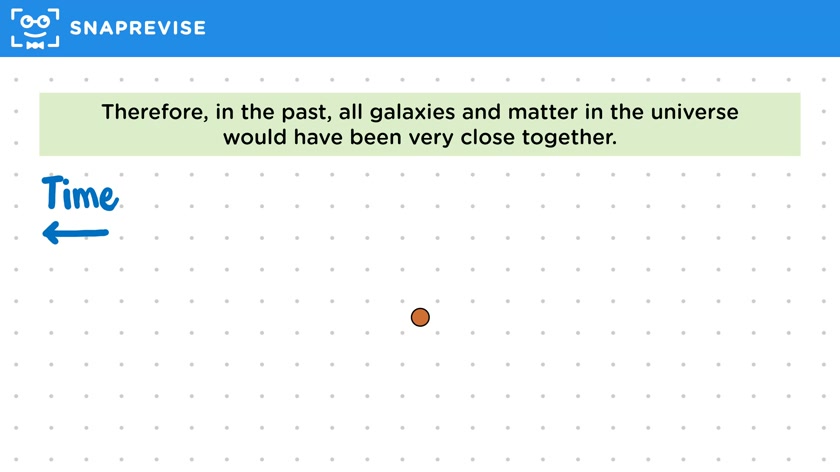
- The Big Bang Theory explains this expansion as originating from a central point.
- Cosmic Microwave Background Radiation (CMBR) is evidence supporting the Big Bang Theory.
- CMBR is believed to be leftover energy from the Big Bang, spread thinly across the universe.
- The Big Bang Theory predicted CMBR before its discovery.
- The theory suggests the universe began with an explosion, spreading matter and heat.
- Observations of Redshift and CMBR support the Big Bang Theory's predictions.
- The universe's expansion and CMBR are key evidence for the Big Bang Theory.
Please subscribe to access these revision notes.
This, and all other video notes, are included in our premium subscriptions.
Premium accounts get access to all videos and revision notes.
61
questions for Space physics (physics only)
19
questions for Red-shift (physics only)