
GCSE Physics (AQA)
346 videos | 23 hours
Please subscribe to watch this video.
This, and all other videos, are included in our premium subscriptions.
Premium accounts get access to all videos.
Enable autoplay to keep watching
Your browser is blocking videos from playing automatically. To turn it back on:
Safari (Mac): Click the Safari menu item in the top bar, then Settings → Websites → Auto-Play, then set Auto-Play to Allow All Auto-Play for the current website.
Safari (iPhone/iPad): open the Settings app, then Apps → Safari → Auto-Play, and select Allow All Auto-Play.
Introduction to Waves
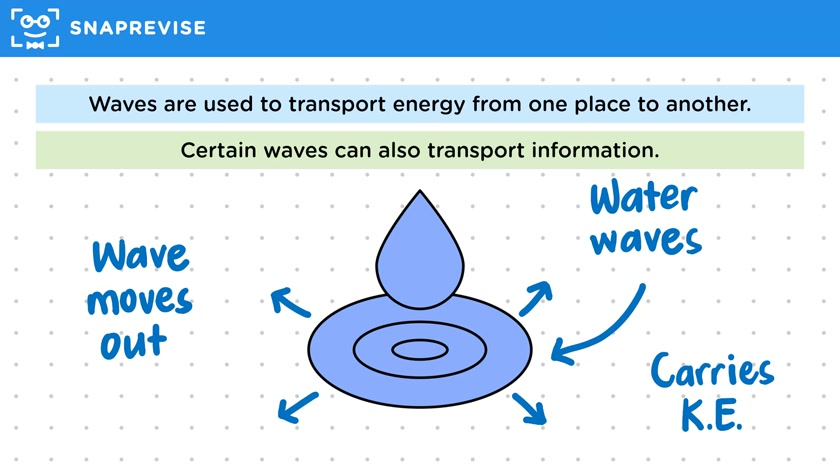
- Waves transport energy from one place to another.
- Types of waves include light waves, seismic waves, and waves on a rope.
- Speakers produce sound waves that transport energy to our ears.
- Sound waves cause bones in the ear to vibrate, allowing the brain to interpret sound.
- Waves can also transport information, such as the characteristics of sound.
- Water waves, like ripples from a raindrop, transport kinetic energy across water.
- Mechanical waves are transported through the movement of matter.
- Mechanical waves include all types except electromagnetic (EM) waves, such as light.
- Sound waves are mechanical waves, moving through air molecules.
- Energy in sound waves causes molecules to move, transferring energy to the next molecule.
- Matter does not move permanently as waves pass; it returns to its original position.
- This principle applies to all waves, mechanical and non-mechanical.
Please subscribe to access these revision notes.
This, and all other video notes, are included in our premium subscriptions.
Premium accounts get access to all videos and revision notes.
172
questions for Waves
72
questions for Waves in air, fluids and solids