
GCSE Physics (AQA)
346 videos | 23 hours
Please subscribe to watch this video.
This, and all other videos, are included in our premium subscriptions.
Premium accounts get access to all videos.
Enable autoplay to keep watching
Your browser is blocking videos from playing automatically. To turn it back on:
Safari (Mac): Click the Safari menu item in the top bar, then Settings → Websites → Auto-Play, then set Auto-Play to Allow All Auto-Play for the current website.
Safari (iPhone/iPad): open the Settings app, then Apps → Safari → Auto-Play, and select Allow All Auto-Play.
Pressure & Depth
- A liquid exerts pressure on submerged objects due to the weight of the liquid particles above.
- Pressure is defined as force spread over an area.
- Water exerts pressure on an ice cube due to the weight of the water pushing particles against it.
- Pressure increases with depth; deeper objects experience greater pressure.
- An ice cube at the bottom of a glass experiences more pressure than one floating at the top due to more liquid weighing down on it.
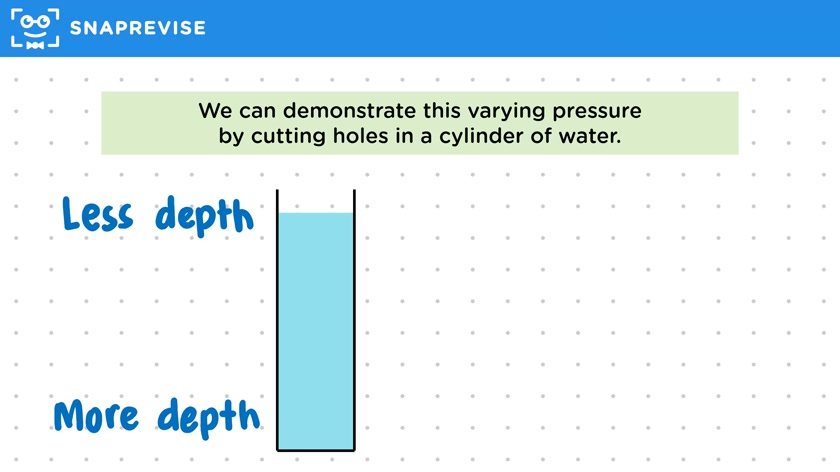
- Pressure difference can be demonstrated by cutting holes in a water-filled cylinder; water is ejected with different trajectories due to varying pressure.
- More pressure results in more force, causing water from lower holes to accelerate with more force.
- This experiment may need to be explained in exams.
- Divers need to be cautious of water pressure when diving, as pressure increases with depth.
- At a depth of 10 meters, pressure increases by one atmosphere, doubling the pressure experienced at sea level.
- High water pressure makes exploring ocean depths challenging.
- More of the solar system has been explored than the Earth's oceans due to these challenges.
Please subscribe to access these revision notes.
This, and all other video notes, are included in our premium subscriptions.
Premium accounts get access to all videos and revision notes.
153
questions for Forces
19
questions for Pressure and pressure differences in fluids (physics only)