
GCSE Physics (AQA)
346 videos | 23 hours
Please subscribe to watch this video.
This, and all other videos, are included in our premium subscriptions.
Premium accounts get access to all videos.
Enable autoplay to keep watching
Your browser is blocking videos from playing automatically. To turn it back on:
Safari (Mac): Click the Safari menu item in the top bar, then Settings → Websites → Auto-Play, then set Auto-Play to Allow All Auto-Play for the current website.
Safari (iPhone/iPad): open the Settings app, then Apps → Safari → Auto-Play, and select Allow All Auto-Play.
Acceleration Due to Gravity
- Objects falling freely under gravity near Earth's surface have a downward acceleration of approximately 9.8 meters per second squared.
- Acceleration measures how much velocity changes over time.
- An apple falling freely under gravity is only acted upon by its weight, calculated as mg (mass x gravitational field strength).
- If no other forces act on the apple, its acceleration is 9.8 meters per second squared.
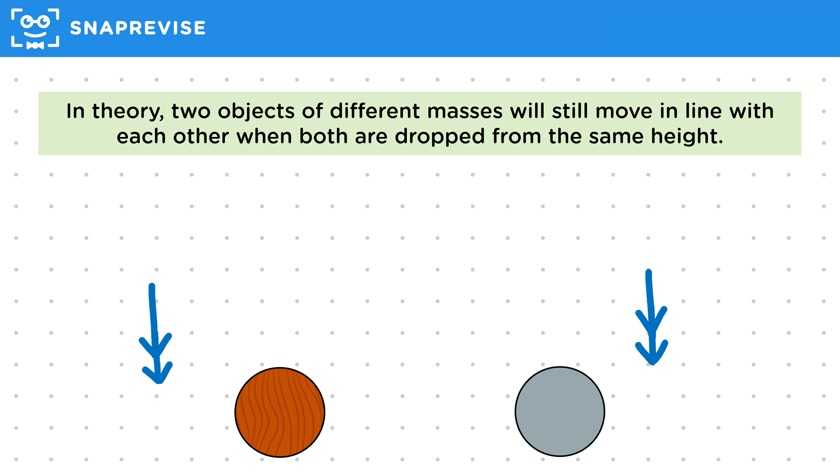
- All free-falling objects theoretically have the same acceleration.
- Galileo's experiment showed that objects of different masses fall at the same rate when dropped from the same height.
- Misconception: Heavier objects fall faster due to greater acceleration from gravity.
- In practice, objects fall at different speeds due to varying air resistance.
- Air resistance is a force caused by collisions with air molecules, influenced by factors like object shape.
- A feather and a rock fall at different rates due to differing air resistance, not different gravitational acceleration.
- Freely falling objects theoretically experience the same acceleration, but other forces often affect them in practice.
- Understanding the theory of free-fall acceleration is important, despite practical variations.
Please subscribe to access these revision notes.
This, and all other video notes, are included in our premium subscriptions.
Premium accounts get access to all videos and revision notes.
153
questions for Forces
98
questions for Forces and motion