
GCSE Physics (AQA)
346 videos | 23 hours
Please subscribe to watch this video.
This, and all other videos, are included in our premium subscriptions.
Premium accounts get access to all videos.
Enable autoplay to keep watching
Your browser is blocking videos from playing automatically. To turn it back on:
Safari (Mac): Click the Safari menu item in the top bar, then Settings → Websites → Auto-Play, then set Auto-Play to Allow All Auto-Play for the current website.
Safari (iPhone/iPad): open the Settings app, then Apps → Safari → Auto-Play, and select Allow All Auto-Play.
Alternating & Direct Potential Differences
- Direct potential difference remains in one direction, causing a direct current (DC).
- Direct current (DC) is defined as a current where charge carriers flow in the same direction around a circuit.
- Electrons in a direct current travel in the same direction.
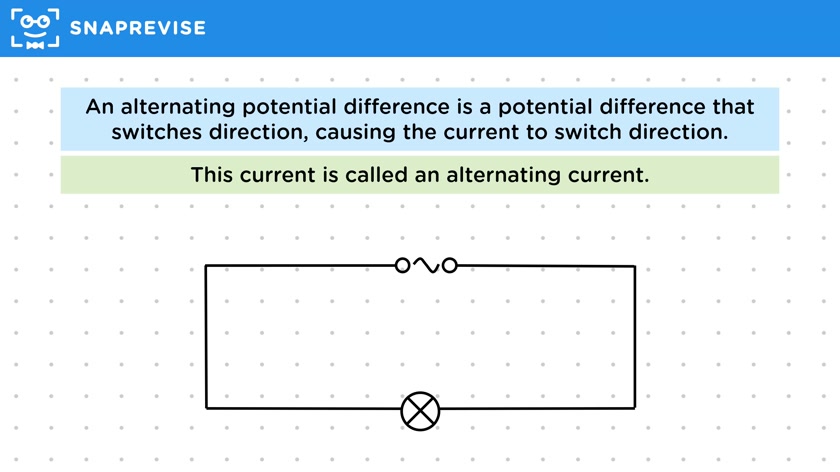
- Alternating potential difference switches direction, causing the current to switch direction, known as alternating current (AC).
- Alternating current (AC) is defined as a current where charge periodically changes direction in a circuit.
- In AC, charge carriers are pushed back and forth, transferring energy to each other.
- Direct potential differences are provided by power sources like cells or batteries, which have positive and negative terminals.
- Examples of DC sources include cells, batteries, and dynamos, but exams typically require only cells and batteries to be stated.
- Alternating potential differences are provided by power sources such as AC generators.
- AC generators convert kinetic energy into electrical energy and are used in the national grid.
- Only single science students need to know the details of how the AC generator works for exams.
Please subscribe to access these revision notes.
This, and all other video notes, are included in our premium subscriptions.
Premium accounts get access to all videos and revision notes.
144
questions for Electricity
20
questions for Domestic uses and safety