
GCSE Physics (AQA)
346 videos | 23 hours
Please subscribe to watch this video.
This, and all other videos, are included in our premium subscriptions.
Premium accounts get access to all videos.
Enable autoplay to keep watching
Your browser is blocking videos from playing automatically. To turn it back on:
Safari (Mac): Click the Safari menu item in the top bar, then Settings → Websites → Auto-Play, then set Auto-Play to Allow All Auto-Play for the current website.
Safari (iPhone/iPad): open the Settings app, then Apps → Safari → Auto-Play, and select Allow All Auto-Play.
Calculating Pressure
- Pressure is the amount of perpendicular force applied to a unit area of a surface.
- Pressures are caused by forces spread out over a surface, including fluids.
- Pressure equation: P = F/A (Pressure equals force divided by area).
- Normal force acts perpendicular to the surface; surface area is the total area of the surface.
- In exams, the required area is clearly stated or easily calculated.
- Force is measured in Newtons, area in meters squared, and pressure in Pascals.
- One Pascal is the pressure from a one Newton force over a one meter squared surface.
- Pressure can also be measured in atmospheres, but must be converted to Pascals for calculations.
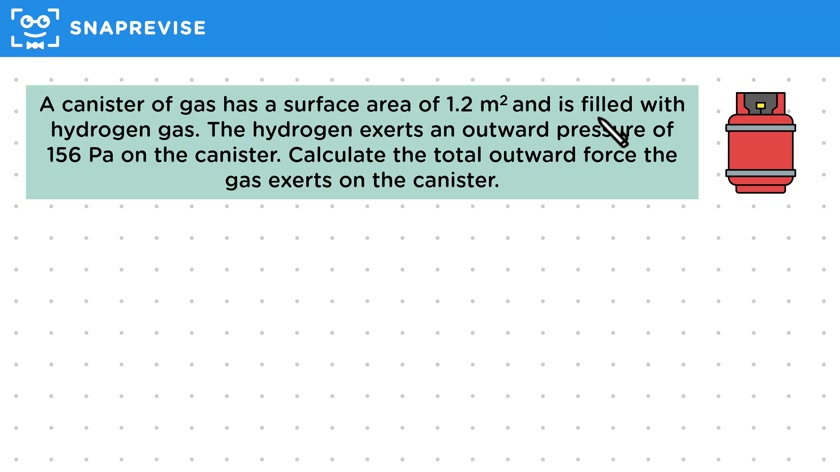
- Example: A gas canister with a surface area of 1.2 meters squared filled with hydrogen exerts 156 Pascals.
- To calculate the total outward force, rearrange the pressure equation to make force the subject.
- Force equation: Force = Pressure x Area.
- Calculation: Force = 156 Pascals x 1.2 meters squared = 187.2 Newtons.
Please subscribe to access these revision notes.
This, and all other video notes, are included in our premium subscriptions.
Premium accounts get access to all videos and revision notes.
153
questions for Forces
19
questions for Pressure and pressure differences in fluids (physics only)