
GCSE Physics (AQA)
346 videos | 23 hours
Please subscribe to watch this video.
This, and all other videos, are included in our premium subscriptions.
Premium accounts get access to all videos.
Enable autoplay to keep watching
Your browser is blocking videos from playing automatically. To turn it back on:
Safari (Mac): Click the Safari menu item in the top bar, then Settings → Websites → Auto-Play, then set Auto-Play to Allow All Auto-Play for the current website.
Safari (iPhone/iPad): open the Settings app, then Apps → Safari → Auto-Play, and select Allow All Auto-Play.
Contamination
- Radioactive contamination is the unwanted presence of radioactive isotopes in materials.
- Example: Water contaminated with radioactive iodine particles.
- Important to distinguish contamination from radiation for exams.
- Nuclear power stations can contaminate surroundings after accidents.
- Radioactive materials can contaminate water and soil, affecting food chains.
- Real-life examples: Chernobyl (1986) and Fukushima (2011).
- Nuclear power stations have extensive safety features; accidents are rare.
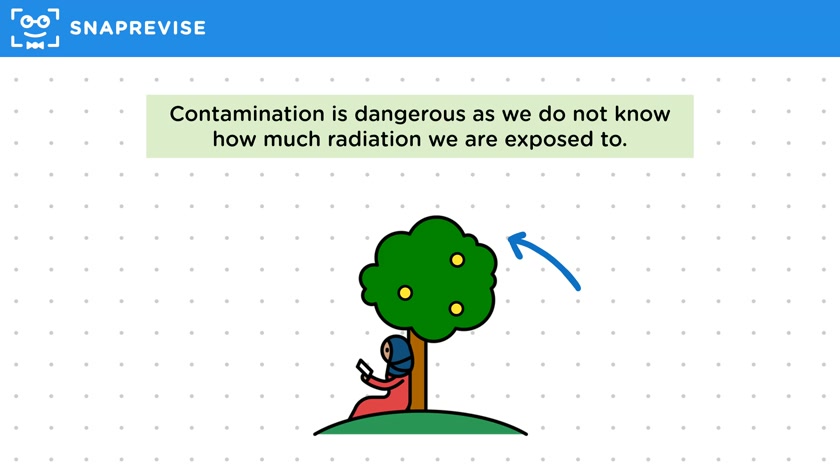
- Contamination is dangerous due to unknown radiation exposure levels.
- Example: A contaminated tree can unknowingly irradiate a person sitting under it.
- Controlled radiation exposure is possible in medical settings.
- Contamination risk depends on the half-life of the isotope.
- Half-life: Time taken for radioactive activity to halve.
- Different isotopes have different half-lives.
- Short half-life isotopes (e.g., iodine-131) cause high irradiation quickly.
- Long half-life isotopes (e.g., cesium-137) persist longer but irradiate less.
- Short half-life isotopes are high risk; long half-life isotopes are low risk.
- Exams may require describing and comparing contamination risks of different isotopes.
Please subscribe to access these revision notes.
This, and all other video notes, are included in our premium subscriptions.
Premium accounts get access to all videos and revision notes.
137
questions for Atomic structure
71
questions for Atoms and nuclear radiation