
GCSE Physics (AQA)
346 videos | 23 hours
Please subscribe to watch this video.
This, and all other videos, are included in our premium subscriptions.
Premium accounts get access to all videos.
Enable autoplay to keep watching
Your browser is blocking videos from playing automatically. To turn it back on:
Safari (Mac): Click the Safari menu item in the top bar, then Settings → Websites → Auto-Play, then set Auto-Play to Allow All Auto-Play for the current website.
Safari (iPhone/iPad): open the Settings app, then Apps → Safari → Auto-Play, and select Allow All Auto-Play.
Dangers of Large Decelerations
- Larger braking force results in shorter braking distance for a given speed.
- Braking force is created by brakes pressing against tires, stopping them from spinning and creating friction with the road.
- Example: A car with a braking force of 2 kilonewtons has a braking distance of 24 meters.
- A second car with a braking force of 6 kilonewtons has a braking distance of 8 meters due to more pressure on the brake pedal or better brake condition.
- Shorter braking distance reduces the chance of hitting a hazard.
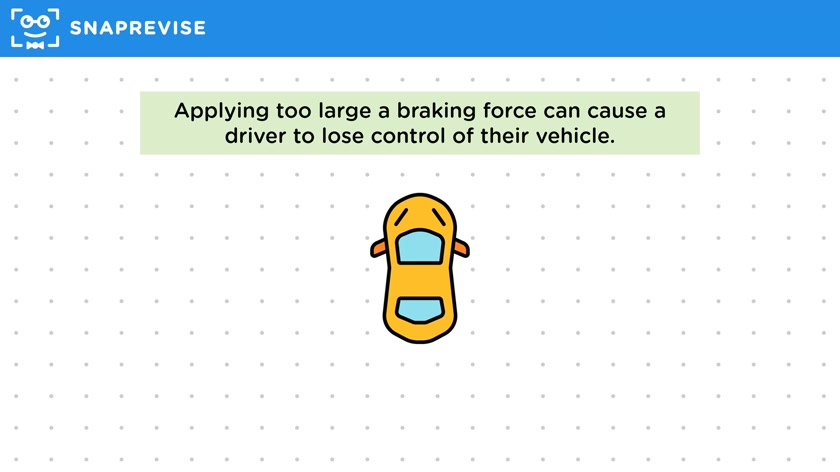
- Applying too large a braking force can cause loss of vehicle control.
- Brakes stop tires from spinning, creating friction, but can cause tires to slide if applied too hard.
- On roads with less friction, tires can't grip properly, leading to skidding.
- Drivers should gradually apply brakes to prevent sliding and skidding.
- Large braking force can cause brakes to overheat.
- Brakes transfer kinetic energy to thermal energy, heating up when applied.
- Excessive heat from heavy braking can damage brakes as components burn or deform.
- Understanding the dangers of large braking forces, including skidding and overheating, is important for exams.
Please subscribe to access these revision notes.
This, and all other video notes, are included in our premium subscriptions.
Premium accounts get access to all videos and revision notes.
153
questions for Forces
98
questions for Forces and motion