
GCSE Physics (AQA)
346 videos | 23 hours
Please subscribe to watch this video.
This, and all other videos, are included in our premium subscriptions.
Premium accounts get access to all videos.
Enable autoplay to keep watching
Your browser is blocking videos from playing automatically. To turn it back on:
Safari (Mac): Click the Safari menu item in the top bar, then Settings → Websites → Auto-Play, then set Auto-Play to Allow All Auto-Play for the current website.
Safari (iPhone/iPad): open the Settings app, then Apps → Safari → Auto-Play, and select Allow All Auto-Play.
Diodes
- A diode allows current to flow in one direction only.
- Diodes are also known as semiconductor diodes.
- Diodes typically have a gray stripe to indicate direction.
- Recognizing and drawing the circuit symbol for a diode is important.
- The circuit symbol consists of a triangle and a line in a circle, indicating the diode's direction.
- Current flows in the direction of the triangle, known as positive bias.
- Reversing the current direction stops the flow due to the diode.
- In exams, understanding when a current will or won't flow through a diode is necessary.
- Conventional current flows from the positive to the negative end of a cell.
- Diodes are useful in complex circuits to prevent reverse current flow.
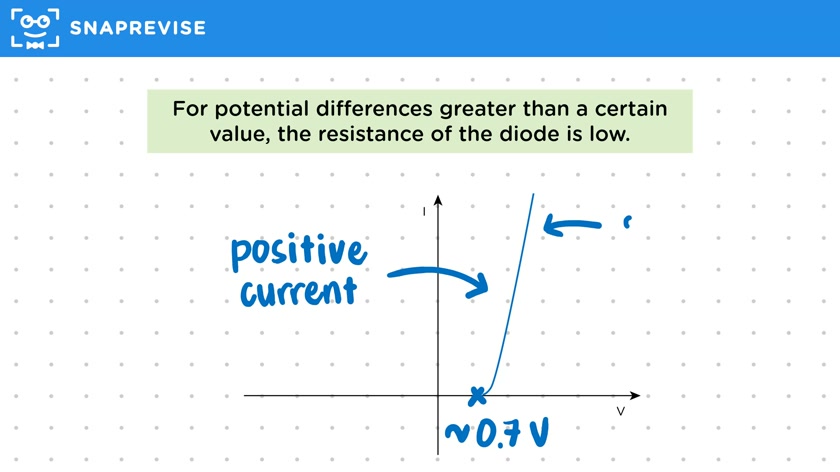
- Diodes stop current through high resistance, shown in an IV graph.
- The threshold potential difference is where diode resistance is low, typically around 0.7 volts.
- Above the threshold, the diode has low resistance; below it, resistance is high, stopping current.
- Light Emitting Diodes (LEDs) light up when current flows in the correct direction.
- LEDs are similar to diodes but emit light and have different physical indicators for direction.
- The IV graph for LEDs is similar to standard diodes, showing low resistance above the threshold and high resistance below.
Please subscribe to access these revision notes.
This, and all other video notes, are included in our premium subscriptions.
Premium accounts get access to all videos and revision notes.
144
questions for Electricity
48
questions for Current, potential difference and resistance