
GCSE Physics (AQA)
346 videos | 23 hours
Please subscribe to watch this video.
This, and all other videos, are included in our premium subscriptions.
Premium accounts get access to all videos.
Enable autoplay to keep watching
Your browser is blocking videos from playing automatically. To turn it back on:
Safari (Mac): Click the Safari menu item in the top bar, then Settings → Websites → Auto-Play, then set Auto-Play to Allow All Auto-Play for the current website.
Safari (iPhone/iPad): open the Settings app, then Apps → Safari → Auto-Play, and select Allow All Auto-Play.
Efficiency
- Energy transfer converts input energy to useful and wasted energy.
- Wasted energy is energy in a form that is not wanted or usable.
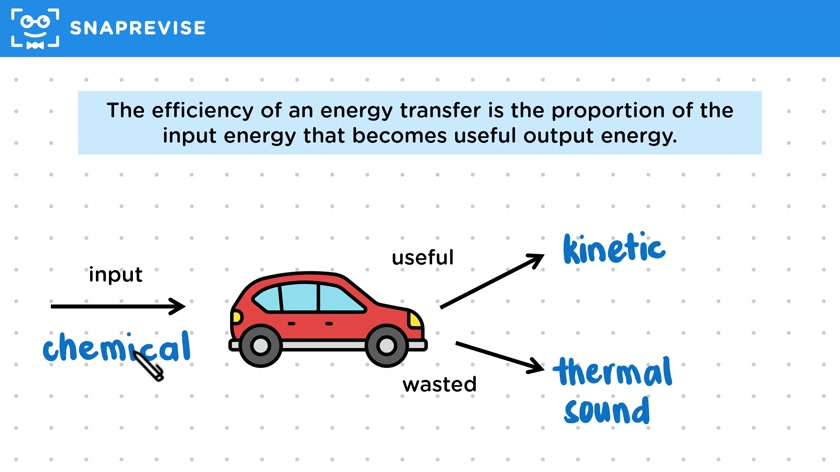
- Example: Accelerating a car involves converting chemical energy in fuel to kinetic energy in wheels.
- Useful output: Increased car speed.
- Other energy transfers include thermal energy due to friction and sound energy from engine noise.
- Thermal and sound energy are considered wasted energy in this context.
- Efficiency of energy transfer is the proportion of input energy that becomes useful output energy.
- Higher efficiency means more useful output from a given input.
- Example: If 60% of energy is converted to kinetic energy, efficiency is 60%.
- Knowing efficiency is important for reducing input energy needed for the same output.
- More efficient processes require less input energy for the desired output.
- Example: Two cars needing different input energies for the same kinetic energy output due to differing efficiencies.
- More efficient car requires less fuel to achieve the same kinetic energy output.
Please subscribe to access these revision notes.
This, and all other video notes, are included in our premium subscriptions.
Premium accounts get access to all videos and revision notes.
88
questions for Energy
25
questions for Conservation and dissipation of energy