
GCSE Physics (AQA)
346 videos | 23 hours
Please subscribe to watch this video.
This, and all other videos, are included in our premium subscriptions.
Premium accounts get access to all videos.
Enable autoplay to keep watching
Your browser is blocking videos from playing automatically. To turn it back on:
Safari (Mac): Click the Safari menu item in the top bar, then Settings → Websites → Auto-Play, then set Auto-Play to Allow All Auto-Play for the current website.
Safari (iPhone/iPad): open the Settings app, then Apps → Safari → Auto-Play, and select Allow All Auto-Play.
Electromagnetic Spectrum
- Properties of electromagnetic waves change with frequency and wavelength.
- Electromagnetic waves are transverse waves that don't require matter to travel.
- Examples include microwaves and ultraviolet (UV) waves, both transverse but with different wavelengths and frequencies.
- Microwaves are suited for communication, UV light for tanning.
- Electromagnetic waves with higher frequencies have shorter wavelengths, and vice versa.
- Wave speed is calculated by multiplying wavelength by frequency (V = ��F).
- All electromagnetic waves travel at the same speed; wavelength and frequency are inversely proportional.
- Microwaves have large wavelengths and low frequencies; UV light has low wavelengths and high frequencies.
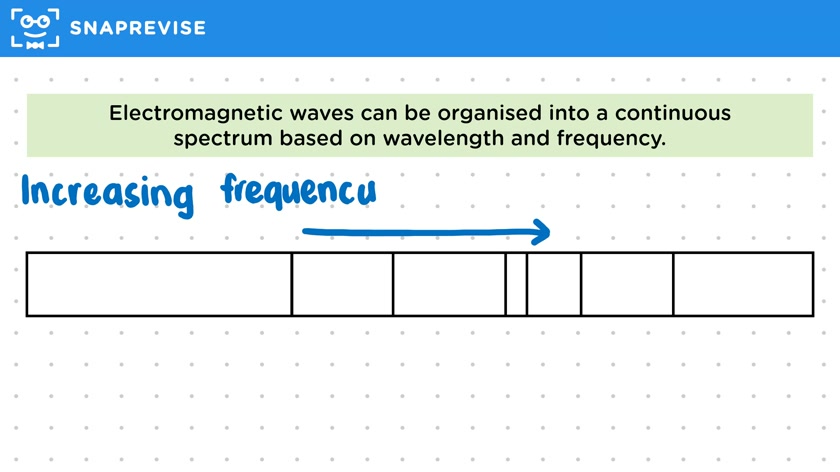
- Electromagnetic waves are organized into a continuous spectrum based on wavelength and frequency, known as the electromagnetic spectrum.
- Spectrum represented as a table with different types of EM waves, with no gaps and potential overlap.
- Horizontal axis represents increasing frequencies and decreasing wavelengths.
- EM spectrum groups: radio waves, microwaves, infrared waves, visible light, ultraviolet waves, X-rays, gamma waves.
- Radio waves have the longest wavelengths, used for TV, radio broadcasts, and wireless communications.
- Microwaves used in ovens and satellite communications.
- Infrared waves used for transferring or detecting heat.
- Visible light is the range of EM waves our eyes can detect, important for seeing and recognizing color.
- Ultraviolet waves cause skin tanning.
- X-rays used for medical imaging of bones.
- Gamma waves, or gamma radiation, are high-frequency and can ionize atoms, part of ionizing radiation along with alpha and beta particles.
Please subscribe to access these revision notes.
This, and all other video notes, are included in our premium subscriptions.
Premium accounts get access to all videos and revision notes.
172
questions for Waves
81
questions for Electromagnetic waves