
GCSE Physics (AQA)
346 videos | 23 hours
Please subscribe to watch this video.
This, and all other videos, are included in our premium subscriptions.
Premium accounts get access to all videos.
Enable autoplay to keep watching
Your browser is blocking videos from playing automatically. To turn it back on:
Safari (Mac): Click the Safari menu item in the top bar, then Settings → Websites → Auto-Play, then set Auto-Play to Allow All Auto-Play for the current website.
Safari (iPhone/iPad): open the Settings app, then Apps → Safari → Auto-Play, and select Allow All Auto-Play.
EM Waves & Atoms
- Certain electromagnetic waves can be absorbed by atoms.
- Atoms consist of electrons orbiting a nucleus of protons and neutrons.
- Electromagnetic waves carry energy without matter.
- Examples of absorbable waves: infrared (IR), visible light, ultraviolet (UV), and x-rays.
- Each atom absorbs waves with specific frequencies.
- Atoms absorb electromagnetic waves to gain energy, which is transferred to electrons to change orbits.
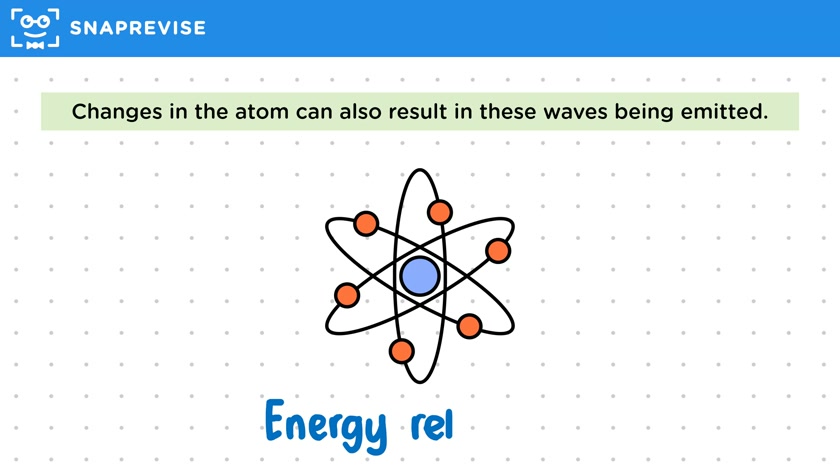
- Changes in atoms can result in the emission of electromagnetic waves.
- Atoms release energy as electromagnetic waves to become stable after absorbing too much energy.
- Emitted waves are usually infrared, visible, ultraviolet, or x-rays.
- Devices like X-ray machines and UV lamps make atoms unstable to emit these waves.
- High-frequency EM waves include gamma waves, which are not absorbed by atoms in the same way.
- Gamma rays are generated due to changes in a nucleus.
- The nucleus can gain excess energy through reactions or absorbing certain waves.
- To release this energy, the nucleus emits gamma waves.
- Gamma waves are specifically emitted from the nucleus, not lower frequency EM waves.
Please subscribe to access these revision notes.
This, and all other video notes, are included in our premium subscriptions.
Premium accounts get access to all videos and revision notes.
172
questions for Waves
81
questions for Electromagnetic waves