
GCSE Physics (AQA)
346 videos | 23 hours
Please subscribe to watch this video.
This, and all other videos, are included in our premium subscriptions.
Premium accounts get access to all videos.
Enable autoplay to keep watching
Your browser is blocking videos from playing automatically. To turn it back on:
Safari (Mac): Click the Safari menu item in the top bar, then Settings → Websites → Auto-Play, then set Auto-Play to Allow All Auto-Play for the current website.
Safari (iPhone/iPad): open the Settings app, then Apps → Safari → Auto-Play, and select Allow All Auto-Play.
Filament Lamps
- A filament lamp converts electrical energy to light.
- Current flows through the filament wire in the bulb, causing it to heat up and glow.
- Understanding the details of how lamps work is not necessary for exams, but recognizing and analyzing the IV graph is important.
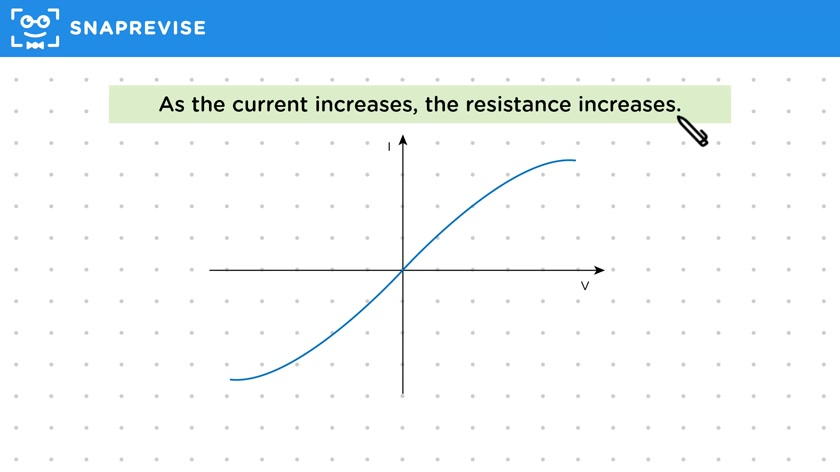
- The IV graph for a filament lamp is curved.
- The IV graph shows the relationship between current (Y axis) and potential difference (X axis).
- For a filament lamp, the graph is roughly straight in the middle for low potential differences and curves down at higher potential differences.
- The pattern is the same when reversing the current to get negative values.
- The filament lamp is a non-omic conductor, meaning current and potential difference are not proportional.
- As current increases, resistance increases.
- The gradient of an IV graph indicates the resistance of the component.
- A steeper IV graph means lower resistance.
- Near the origin, the lamp has a low resistance with a steep gradient.
- At the ends of the graph, the lamp has high resistance with a nearly horizontal graph.
- As potential difference increases, there is little change in current.
- Resistance changes because larger currents increase the filament's temperature.
- Higher current results in higher temperature and higher resistance in the filament.
- The increase in resistance is caused by the increase in temperature.
Please subscribe to access these revision notes.
This, and all other video notes, are included in our premium subscriptions.
Premium accounts get access to all videos and revision notes.
144
questions for Electricity
48
questions for Current, potential difference and resistance