
GCSE Physics (AQA)
346 videos | 23 hours
Please subscribe to watch this video.
This, and all other videos, are included in our premium subscriptions.
Premium accounts get access to all videos.
Enable autoplay to keep watching
Your browser is blocking videos from playing automatically. To turn it back on:
Safari (Mac): Click the Safari menu item in the top bar, then Settings → Websites → Auto-Play, then set Auto-Play to Allow All Auto-Play for the current website.
Safari (iPhone/iPad): open the Settings app, then Apps → Safari → Auto-Play, and select Allow All Auto-Play.
Floating & Sinking
- An object in a fluid will either float to the surface or sink down.
- Floating and sinking can apply to both liquids and gases, but GCSE focuses on liquids.
- Whether an object floats or sinks depends on the balance between its weight and the upthrust acting on it.
- Weight is a downward force due to gravity, while upthrust is an upward force due to pressure differences.
- Objects will sink if their density is greater than the fluid they are in.
- Dense materials are used for objects designed to sink, like anchors.
- Sea water is denser than pure water due to dissolved salt.
- Pure water has a density of 1000 kg/m��.
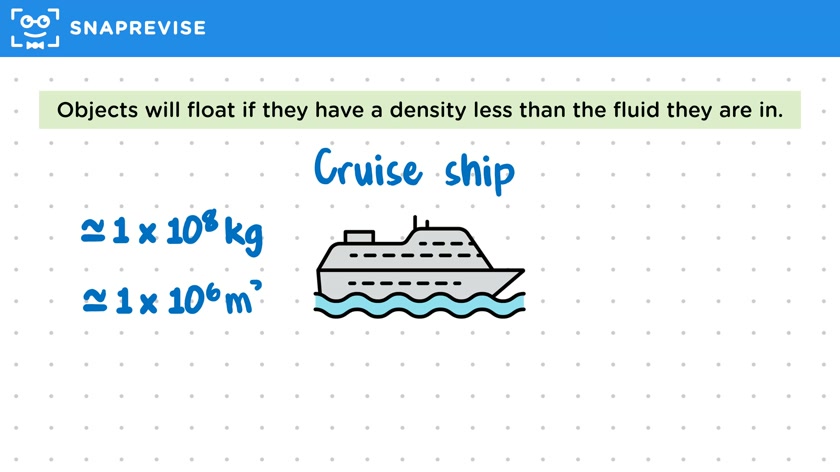
- Objects will float if their density is less than the fluid they are in.
- Large objects like cruise ships can float due to having a density less than water, despite their large mass.
- The density of an object is calculated by dividing its mass by its volume.
- Ships are mostly empty space, which increases volume without significantly increasing mass, resulting in lower density.
- Objects float partially submerged because the upthrust decreases with less submerged volume.
- At the surface, objects stabilize when upthrust balances weight.
- Greater density results in more of the object being submerged when floating.
- More submerged volume means greater upthrust is needed, indicating greater weight and density.
- Understanding the relationship between submerged volume, upthrust, weight, and density is important for exams.
Please subscribe to access these revision notes.
This, and all other video notes, are included in our premium subscriptions.
Premium accounts get access to all videos and revision notes.
153
questions for Forces
19
questions for Pressure and pressure differences in fluids (physics only)