
GCSE Physics (AQA)
346 videos | 23 hours
Please subscribe to watch this video.
This, and all other videos, are included in our premium subscriptions.
Premium accounts get access to all videos.
Enable autoplay to keep watching
Your browser is blocking videos from playing automatically. To turn it back on:
Safari (Mac): Click the Safari menu item in the top bar, then Settings → Websites → Auto-Play, then set Auto-Play to Allow All Auto-Play for the current website.
Safari (iPhone/iPad): open the Settings app, then Apps → Safari → Auto-Play, and select Allow All Auto-Play.
Fluids
- Fluids are substances that flow and change shape to fit a container.
- Liquids are fluids because they change shape to fit a container.
- Particles in liquids are free to move and rearrange, allowing them to flow.
- Examples of liquids as fluids: pouring a drink, water in rivers, water flowing from taps.
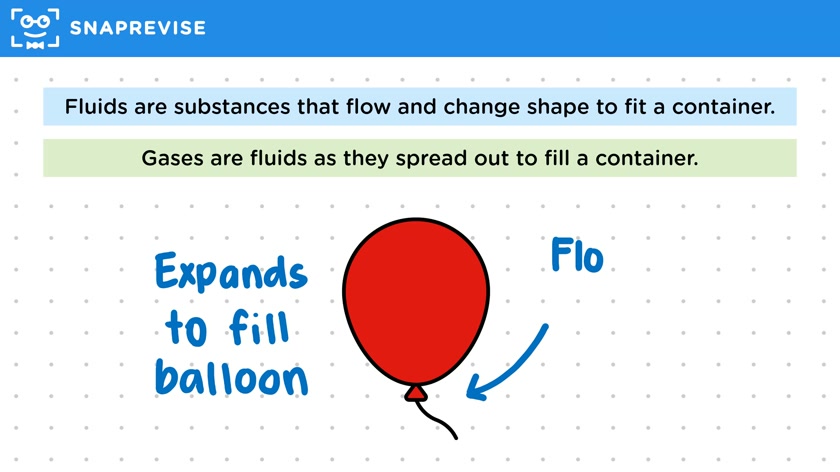
- Gases are also fluids as they spread out to fill a container.
- Gas particles are spread out and constantly moving.
- Example of gases as fluids: gas in a balloon, air in a room, wind.
- Fluid properties can be modeled using solids with small particles.
- Solids themselves are not fluids as their particles don't flow or change shape.
- Solids like a ball pit or a bucket of sand can behave like liquids when poured.
- Other examples of modeling fluid particles: marbles, sugar, salt.
- Important to identify when a substance is or behaves like a fluid.
Please subscribe to access these revision notes.
This, and all other video notes, are included in our premium subscriptions.
Premium accounts get access to all videos and revision notes.
153
questions for Forces
19
questions for Pressure and pressure differences in fluids (physics only)