
GCSE Physics (AQA)
346 videos | 23 hours
Please subscribe to watch this video.
This, and all other videos, are included in our premium subscriptions.
Premium accounts get access to all videos.
Enable autoplay to keep watching
Your browser is blocking videos from playing automatically. To turn it back on:
Safari (Mac): Click the Safari menu item in the top bar, then Settings → Websites → Auto-Play, then set Auto-Play to Allow All Auto-Play for the current website.
Safari (iPhone/iPad): open the Settings app, then Apps → Safari → Auto-Play, and select Allow All Auto-Play.
Hearing Sound
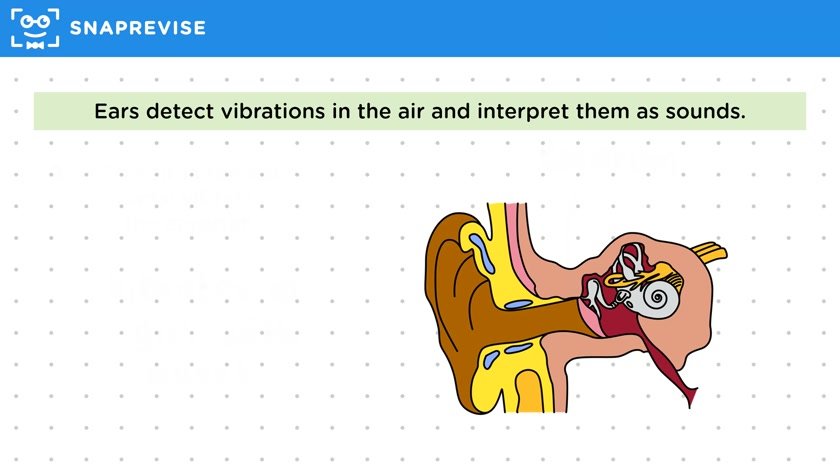
- Ears detect vibrations in the air and interpret them as sounds.
- Diagram shows interior and exterior of an ear, important for hearing sounds.
- Step 1: Sound waves from the air are transferred to the air in the ear canal.
- Sound waves are longitudinal waves traveling through vibrations in matter, like air molecules.
- Energy from sound waves causes air in the ear canal to vibrate, creating a sound wave inside the ear.
- Step 2: Vibrating air in the ear canal causes the eardrum to vibrate.
- Eardrum is a thin membrane that vibrates in sync with sound waves, depending on amplitude and frequency.
- Step 3: Small bones connected to the eardrum vibrate, transferring sound waves to the nerves inside the ear.
- Vibrations in bones have the same frequency and amplitude as those in the eardrum.
- Step 4: Nerves transfer waves to the brain, which interprets them as sound.
- Cochlear nerve creates an electrical signal from bone vibrations, containing frequency and amplitude information.
- Brain interprets amplitude as volume and frequency as pitch.
- For physics exams, basic description of sound transfer from ear to brain may be required, but not specific names like cochlear or small bones.
Please subscribe to access these revision notes.
This, and all other video notes, are included in our premium subscriptions.
Premium accounts get access to all videos and revision notes.
172
questions for Waves
72
questions for Waves in air, fluids and solids