
GCSE Physics (AQA)
346 videos | 23 hours
Please subscribe to watch this video.
This, and all other videos, are included in our premium subscriptions.
Premium accounts get access to all videos.
Enable autoplay to keep watching
Your browser is blocking videos from playing automatically. To turn it back on:
Safari (Mac): Click the Safari menu item in the top bar, then Settings → Websites → Auto-Play, then set Auto-Play to Allow All Auto-Play for the current website.
Safari (iPhone/iPad): open the Settings app, then Apps → Safari → Auto-Play, and select Allow All Auto-Play.
Heat in Homes
- Thermal energy inside a house dissipates outside.
- Homes are kept warm using boilers and radiators, which generate thermal energy.
- Continuous thermal energy generation is needed due to heat loss from the house.
- Heat escapes from any surface of the house, including walls, floors, roofs, and windows.
- Houses with large surface areas dissipate energy faster.
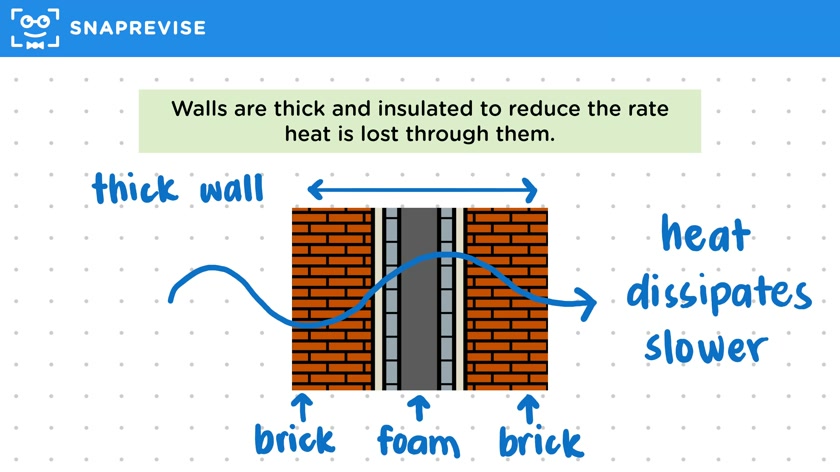
- Thick and insulated walls reduce heat loss.
- Insulating materials like brick are preferred over conductors like metal.
- Modern houses use foam in walls for low thermal conductivity and structural integrity.
- Double glazed windows have an air gap to reduce thermal conductivity.
- Air is used as an insulator in double glazed windows.
- Insulating lofts reduces heat loss through the roof.
- Carpets insulate floors better than tiles.
- Insulation can be used under floorboards to retain heat.
- Understanding these methods is important for exams on reducing heat loss in homes.
Please subscribe to access these revision notes.
This, and all other video notes, are included in our premium subscriptions.
Premium accounts get access to all videos and revision notes.
88
questions for Energy
25
questions for Conservation and dissipation of energy