
GCSE Physics (AQA)
346 videos | 23 hours
Please subscribe to watch this video.
This, and all other videos, are included in our premium subscriptions.
Premium accounts get access to all videos.
Enable autoplay to keep watching
Your browser is blocking videos from playing automatically. To turn it back on:
Safari (Mac): Click the Safari menu item in the top bar, then Settings → Websites → Auto-Play, then set Auto-Play to Allow All Auto-Play for the current website.
Safari (iPhone/iPad): open the Settings app, then Apps → Safari → Auto-Play, and select Allow All Auto-Play.
Heating & Change of State
- Heating a substance changes its state between solid, liquid, and gas.
- Water boils at 100 degrees Celsius, turning from liquid to gas.
- During a change of state, heating does not affect the temperature.
- Kinetic energy of molecules remains unchanged during a state change.
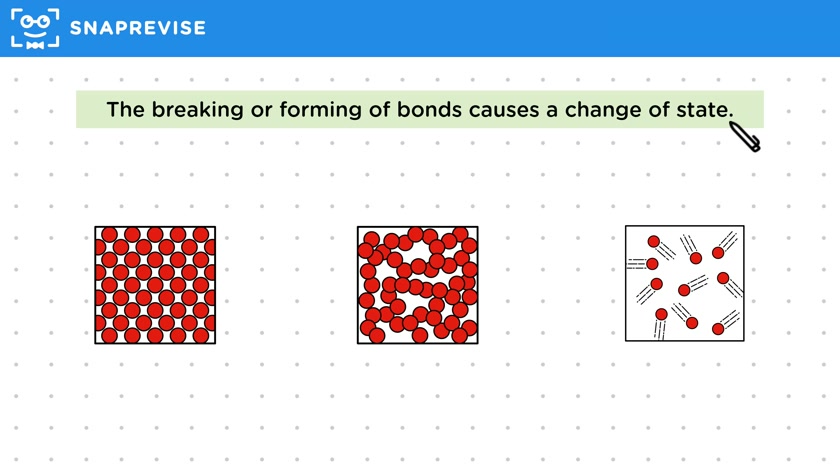
- Energy supplied during heating weakens or breaks intermolecular bonds.
- Bonds reform when thermal energy is removed, indicating a physical process.
- Matter exists in three states: solid (strong bonds), liquid (weaker bonds), gas (few/no bonds).
- State changes involve breaking or forming bonds: melting (solid to liquid), boiling (liquid to gas), condensation (gas to liquid), freezing (liquid to solid).
- Sublimation (solid to gas) and evaporation (liquid to gas without heat) are other state changes.
- Evaporation occurs by absorbing heat from surroundings, without reaching boiling point.
- Evaporation is a slow process as only a few bonds break at a time.
- In exams, understanding that liquids absorb heat from surroundings to change state is essential.
- Sweat cools the body by absorbing heat for evaporation, reducing body temperature faster than surrounding air.
Please subscribe to access these revision notes.
This, and all other video notes, are included in our premium subscriptions.
Premium accounts get access to all videos and revision notes.
99
questions for Particle model of matter
44
questions for Internal energy and energy transfers