
GCSE Physics (AQA)
346 videos | 23 hours
Please subscribe to watch this video.
This, and all other videos, are included in our premium subscriptions.
Premium accounts get access to all videos.
Enable autoplay to keep watching
Your browser is blocking videos from playing automatically. To turn it back on:
Safari (Mac): Click the Safari menu item in the top bar, then Settings → Websites → Auto-Play, then set Auto-Play to Allow All Auto-Play for the current website.
Safari (iPhone/iPad): open the Settings app, then Apps → Safari → Auto-Play, and select Allow All Auto-Play.
Hydraulics
- Hydraulic machines operate by transferring pressure through an incompressible liquid.
- Examples include hydraulic lifts, where an input force on a pedal raises a platform.
- Common liquids used in hydraulic systems are water or oil due to their incompressible nature.
- The pressure applied on the pedal is transferred to the platform, lifting it by spreading the force over an area.
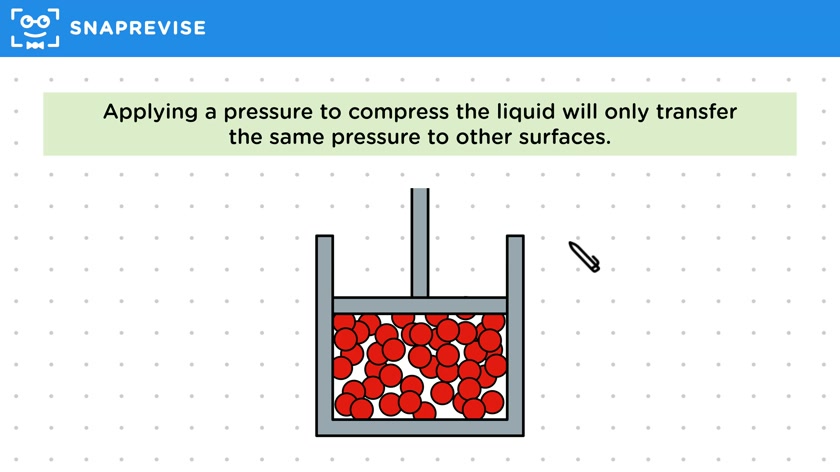
- Liquids are hard to compress because their particles are closely packed yet free to move around, making them maintain volume under pressure.
- Compressing a liquid transfers the applied pressure equally to other surfaces of the container.
- This principle allows a small input force on a small area to generate a larger force on a larger area.
- Hydraulic technology is also used in brake systems of vehicles, where pressure from a pedal is transmitted through brake fluid to apply brakes.
- The pressure from the pedal extends through the fluid to the braking system, creating friction that slows or stops the vehicle.
- Understanding the mechanics of hydraulics is useful for explaining machine operations in various applications, including exams.
Please subscribe to access these revision notes.
This, and all other video notes, are included in our premium subscriptions.
Premium accounts get access to all videos and revision notes.
153
questions for Forces
19
questions for Pressure and pressure differences in fluids (physics only)