
GCSE Physics (AQA)
346 videos | 23 hours
Please subscribe to watch this video.
This, and all other videos, are included in our premium subscriptions.
Premium accounts get access to all videos.
Enable autoplay to keep watching
Your browser is blocking videos from playing automatically. To turn it back on:
Safari (Mac): Click the Safari menu item in the top bar, then Settings → Websites → Auto-Play, then set Auto-Play to Allow All Auto-Play for the current website.
Safari (iPhone/iPad): open the Settings app, then Apps → Safari → Auto-Play, and select Allow All Auto-Play.
Irradiation
- Irradiation is the process of exposing an object to radiation.
- Nuclei decay to become more stable, releasing radiation as particles or electromagnetic waves.
- Exposure to radiation causes ionization within atoms, known as irradiation.
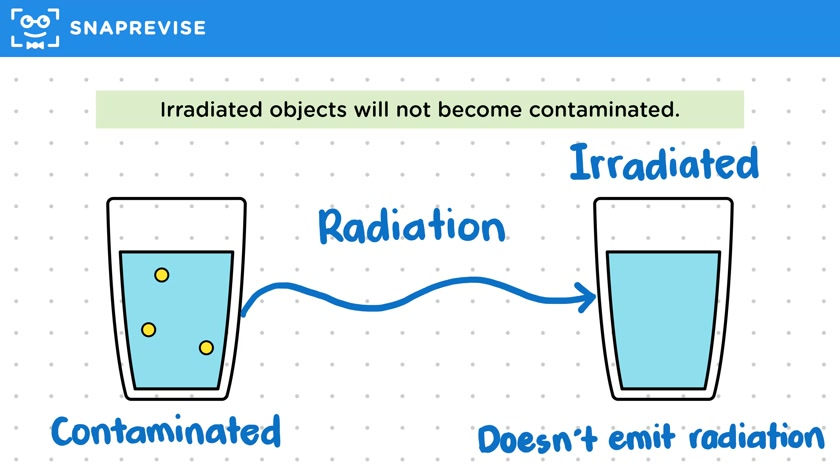
- Irradiated objects do not become contaminated.
- Contamination is the presence of unwanted radioactive atoms in a sample.
- Contamination leads to irradiation as contaminants emit radiation to nearby objects.
- Irradiation does not lead to contamination since no radioactive atoms enter the object.
- Misunderstanding the difference between contamination and irradiation is a common exam error.
- High doses of irradiation can damage or kill cells.
- Alpha particles can destroy cells like bullets.
- Medium doses allow cells to repair; high doses kill cells.
- Low doses do not kill cells but increase cancer risk.
- Low-intensity gamma radiation can ionize cell nuclei, altering DNA and increasing cancer risk.
- For exams, understand potential radiation effects on cells, but not the detailed mechanisms.
Please subscribe to access these revision notes.
This, and all other video notes, are included in our premium subscriptions.
Premium accounts get access to all videos and revision notes.
137
questions for Atomic structure
71
questions for Atoms and nuclear radiation