
GCSE Physics (AQA)
346 videos | 23 hours
Please subscribe to watch this video.
This, and all other videos, are included in our premium subscriptions.
Premium accounts get access to all videos.
Enable autoplay to keep watching
Your browser is blocking videos from playing automatically. To turn it back on:
Safari (Mac): Click the Safari menu item in the top bar, then Settings → Websites → Auto-Play, then set Auto-Play to Allow All Auto-Play for the current website.
Safari (iPhone/iPad): open the Settings app, then Apps → Safari → Auto-Play, and select Allow All Auto-Play.
Liquids
- Liquid is a state of matter where atoms or molecules are in contact in an irregular structure.
- Molecules in a liquid are in contact but not arranged or structured.
- Molecules in a liquid can move and flow around each other while staying in contact.
- Bonds in a liquid are not strong enough to hold molecules in position but strong enough to keep them in contact.
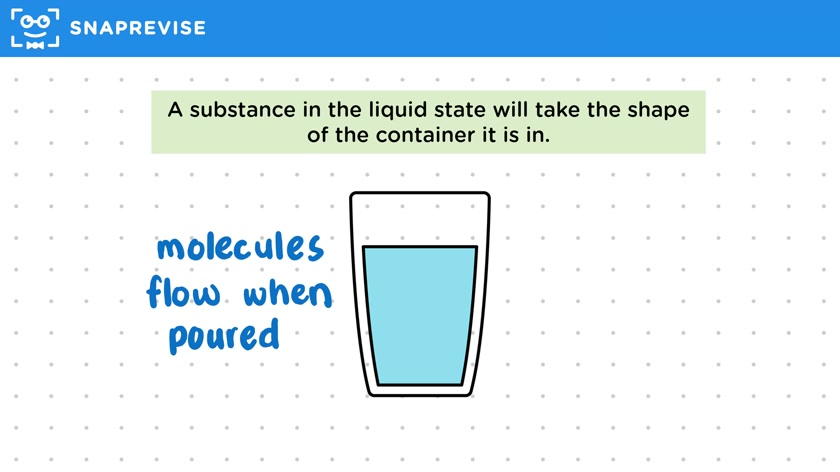
- A liquid takes the shape of its container, such as water in a glass.
- When poured, liquid molecules flow, stay together, and can break off.
- Gravity pushes liquid molecules against the container, changing the liquid's shape to match it.
- Similar to sand or salt particles, where each crystal acts like a liquid molecule but is solid individually.
- In exams, the state of substances will be clearly stated.
- Liquids can easily change shape but are hard to compress.
- Liquid molecules are already in contact, making compression difficult as there's no space to move into.
- In exams, relate the properties of liquids to their molecular structure.
Please subscribe to access these revision notes.
This, and all other video notes, are included in our premium subscriptions.
Premium accounts get access to all videos and revision notes.
99
questions for Particle model of matter
34
questions for Changes of state and the particle model