
GCSE Physics (AQA)
346 videos | 23 hours
Please subscribe to watch this video.
This, and all other videos, are included in our premium subscriptions.
Premium accounts get access to all videos.
Enable autoplay to keep watching
Your browser is blocking videos from playing automatically. To turn it back on:
Safari (Mac): Click the Safari menu item in the top bar, then Settings → Websites → Auto-Play, then set Auto-Play to Allow All Auto-Play for the current website.
Safari (iPhone/iPad): open the Settings app, then Apps → Safari → Auto-Play, and select Allow All Auto-Play.
Mains Electricity
- Electricity in homes is supplied by a main supply through household plug sockets.
- Plugging in a device completes a circuit with the main power supply.
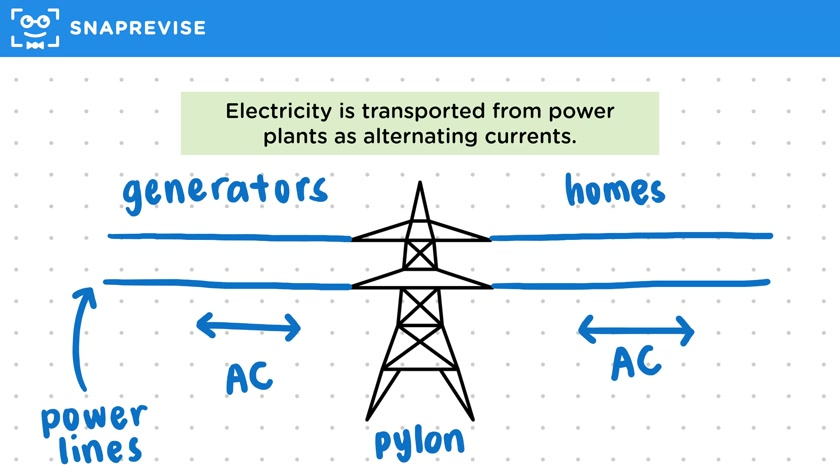
- Electricity is transported from power plants as alternating currents (AC).
- Electricity is generated from sources like wind, coal, natural gas, or water through AC generators.
- Pylons transport electricity, keeping wires at a safe height using power lines.
- Electricity is transported from power plants to homes and industries.
- Energy is transported by alternating current, with charge carriers pushing each other back and forth.
- In the UK, main electricity is supplied at 230 volts and a frequency of 50 hertz.
- For exams, students should recall these values.
- The potential difference of 230 volts is equivalent to the direct current, not the peak current.
- A frequency of 50 hertz means electricity completes a cycle in one 50th of a second.
- These values apply to homes; industry has higher potential differences.
- Other countries may have different potential differences but similar frequencies to the UK.
Please subscribe to access these revision notes.
This, and all other video notes, are included in our premium subscriptions.
Premium accounts get access to all videos and revision notes.
144
questions for Electricity
20
questions for Domestic uses and safety