
GCSE Physics (AQA)
346 videos | 23 hours
Please subscribe to watch this video.
This, and all other videos, are included in our premium subscriptions.
Premium accounts get access to all videos.
Enable autoplay to keep watching
Your browser is blocking videos from playing automatically. To turn it back on:
Safari (Mac): Click the Safari menu item in the top bar, then Settings → Websites → Auto-Play, then set Auto-Play to Allow All Auto-Play for the current website.
Safari (iPhone/iPad): open the Settings app, then Apps → Safari → Auto-Play, and select Allow All Auto-Play.
Natural Background Radiation
- Background radiation is a small amount of radiation always present around us from various sources.
- This radiation is generally too weak to cause harm compared to direct source exposure.
- Background radiation sources include:
- Radioactive isotopes in rocks such as thorium, uranium, radon, and potassium.
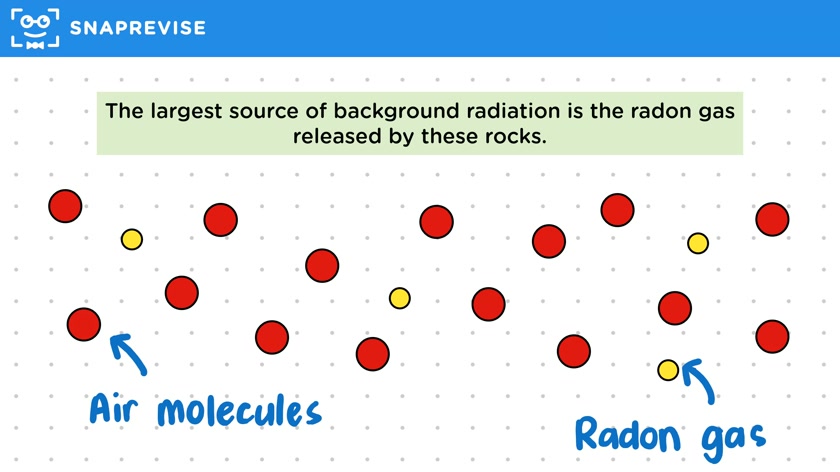
- Radon gas released by rocks is the largest source of background radiation.
- Organic materials contain radioactive isotopes like carbon-14 and potassium-40.
- Water can pick up radioactive isotopes from the earth, which then enter rivers.
- Cosmic rays from outer space contribute to background radiation on earth.
- Radon is particularly dangerous as an alpha emitter that can be inhaled.
- Certain areas have higher radon concentrations depending on rock types.
- Cosmic rays reach the earth as electromagnetic waves and can cause nuclear reactions creating unstable isotopes.
- It is important to remember various sources of background radiation for exams.
Please subscribe to access these revision notes.
This, and all other video notes, are included in our premium subscriptions.
Premium accounts get access to all videos and revision notes.
137
questions for Atomic structure
26
questions for Hazards and uses of radioactive emissions and of background radiation (physics only)