
GCSE Physics (AQA)
346 videos | 23 hours
Please subscribe to watch this video.
This, and all other videos, are included in our premium subscriptions.
Premium accounts get access to all videos.
Enable autoplay to keep watching
Your browser is blocking videos from playing automatically. To turn it back on:
Safari (Mac): Click the Safari menu item in the top bar, then Settings → Websites → Auto-Play, then set Auto-Play to Allow All Auto-Play for the current website.
Safari (iPhone/iPad): open the Settings app, then Apps → Safari → Auto-Play, and select Allow All Auto-Play.
Newton's Second Law
- Newton's second law states that the acceleration of an object is proportional to the resultant force acting on it and inversely proportional to its mass.
- This law is crucial for understanding how motion changes when forces are applied.
- Proportionality means if one quantity doubles, the other also doubles; inversely proportional means if one doubles, the other halves.
- Example given: a cyclist with forward driving force and backward frictional force; resultant force is the vector sum of these forces.
- If resultant force increases (e.g., stronger driving force), acceleration increases proportionally.
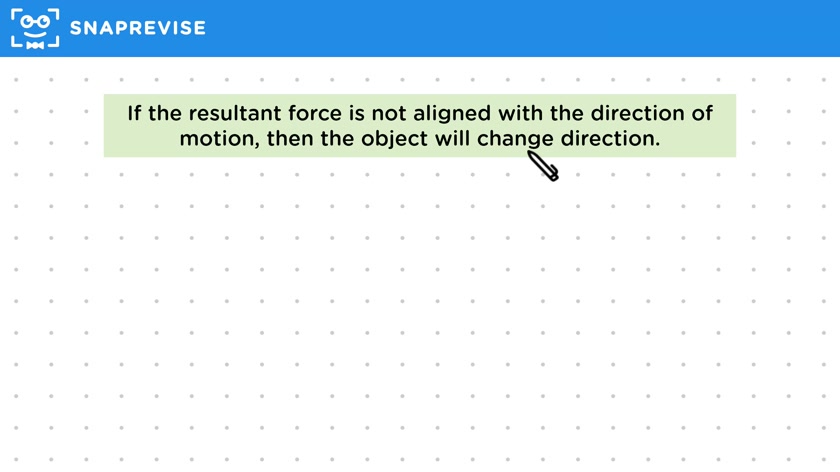
- Direction of resultant force and acceleration are important; if aligned with motion, speed increases; if opposite, speed decreases.
- Example of skydiver: downward weight and upward drag, with resultant force determining acceleration and speed changes.
- If resultant force is perpendicular to motion, the object changes direction but not necessarily speed.
- Mass affects acceleration; heavier objects need more force to achieve the same acceleration as lighter objects.
- Newton's first law is a special case of the second law where the resultant force is zero, leading to no acceleration and constant velocity.
- Understanding these principles is essential for explaining motion and forces in various contexts, crucial for exams.
Please subscribe to access these revision notes.
This, and all other video notes, are included in our premium subscriptions.
Premium accounts get access to all videos and revision notes.
153
questions for Forces
98
questions for Forces and motion