
GCSE Physics (AQA)
346 videos | 23 hours
Please subscribe to watch this video.
This, and all other videos, are included in our premium subscriptions.
Premium accounts get access to all videos.
Enable autoplay to keep watching
Your browser is blocking videos from playing automatically. To turn it back on:
Safari (Mac): Click the Safari menu item in the top bar, then Settings → Websites → Auto-Play, then set Auto-Play to Allow All Auto-Play for the current website.
Safari (iPhone/iPad): open the Settings app, then Apps → Safari → Auto-Play, and select Allow All Auto-Play.
Perfect Black Body
- Different objects absorb varying amounts of infrared and electromagnetic radiation.
- Electromagnetic radiation includes waves of all wavelengths.
- When infrared radiation is directed at objects, they can transmit, reflect, or absorb the waves.
- A ball reflects more radiation than a rock, indicating different absorption levels.
- A perfect black body is a theoretical object that absorbs all radiation without reflecting or transmitting any.
- Black bodies are excellent absorbers and emitters of radiation.
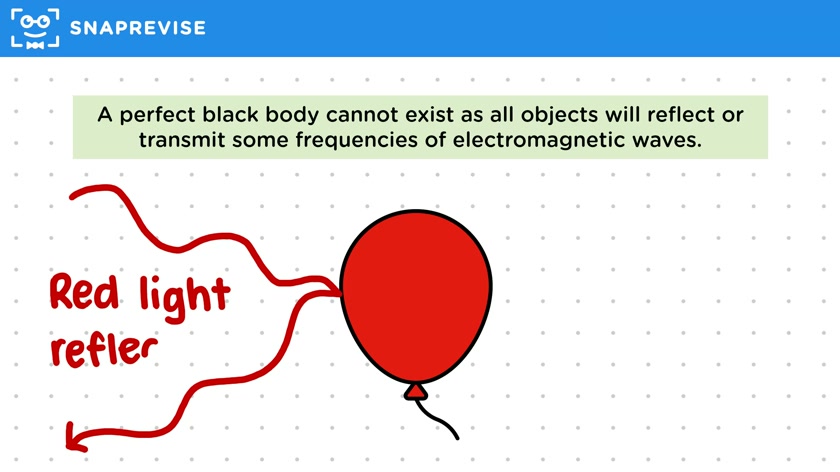
- A perfect black body cannot exist as all objects reflect or transmit some electromagnetic waves.
- Objects modeled as black bodies absorb almost all electromagnetic radiation.
- Stars and planets are examples of objects modeled as black bodies.
- Modern camouflage and certain heaters, cameras, and coatings are designed to mimic black bodies.
- Some objects are designed to be poor absorbers and emitters, like radiators and mirrors.
- Radiators should emit heat slowly, not like a black body.
- Mirrors need to reflect visible light, not absorb it like a black body.
- White or shiny surfaces are used to reduce radiation absorption.
- Understanding black bodies is important for exams and explaining object behavior.
Please subscribe to access these revision notes.
This, and all other video notes, are included in our premium subscriptions.
Premium accounts get access to all videos and revision notes.
172
questions for Waves
19
questions for Black body radiation (physics only)