
GCSE Physics (AQA)
346 videos | 23 hours
Please subscribe to watch this video.
This, and all other videos, are included in our premium subscriptions.
Premium accounts get access to all videos.
Enable autoplay to keep watching
Your browser is blocking videos from playing automatically. To turn it back on:
Safari (Mac): Click the Safari menu item in the top bar, then Settings → Websites → Auto-Play, then set Auto-Play to Allow All Auto-Play for the current website.
Safari (iPhone/iPad): open the Settings app, then Apps → Safari → Auto-Play, and select Allow All Auto-Play.
Radiation Dose
- Radiation dose measures exposure to radiation.
- Dose determined by radiation intensity and exposure.
- Measured in sieverts (Sv), but exact value not needed for exams.
- Small dose from eating a banana (~0.0001 mSv), low risk.
- Medium dose from X-ray (~0.1 mSv), limit procedures.
- High dose in nuclear power plants, limit to 50 mSv/year.
- 1000 mSv equals 1 Sv.
- Low doses don't harm cells but increase cancer risk.
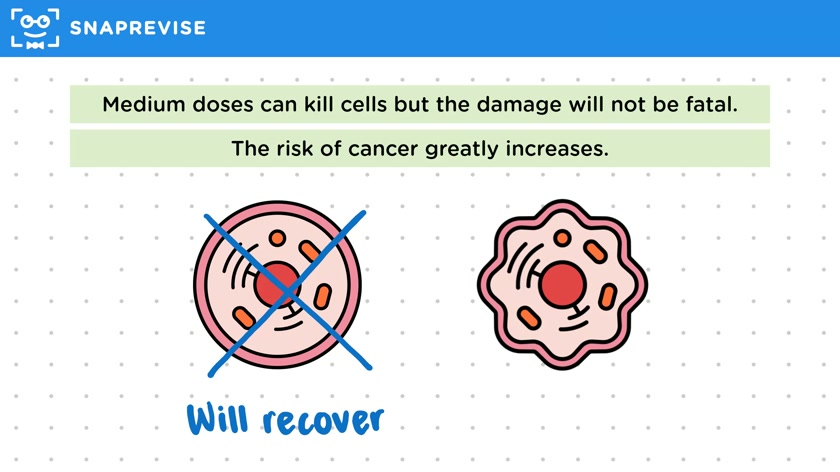
- Medium doses can kill cells, increase cancer risk, but not fatal.
- High doses likely fatal, damage gut and bone marrow.
- Large doses observed in Chernobyl, damaging organs beyond repair.
- Track radiation dose to avoid long-term damage.
- Low dose: <10 mSv, slight cancer risk increase.
- Medium dose: 10-1000 mSv, short-term cell damage, higher cancer risk.
- High dose: 1-4 Sv, likely fatal damage.
- Very high dose: >10 Sv, guaranteed fatal damage.
- Aim to keep radiation dose at low levels.
- Understand effects of dose size qualitatively or quantitatively.
Please subscribe to access these revision notes.
This, and all other video notes, are included in our premium subscriptions.
Premium accounts get access to all videos and revision notes.
137
questions for Atomic structure
26
questions for Hazards and uses of radioactive emissions and of background radiation (physics only)