
GCSE Physics (AQA)
346 videos | 23 hours
Please subscribe to watch this video.
This, and all other videos, are included in our premium subscriptions.
Premium accounts get access to all videos.
Enable autoplay to keep watching
Your browser is blocking videos from playing automatically. To turn it back on:
Safari (Mac): Click the Safari menu item in the top bar, then Settings → Websites → Auto-Play, then set Auto-Play to Allow All Auto-Play for the current website.
Safari (iPhone/iPad): open the Settings app, then Apps → Safari → Auto-Play, and select Allow All Auto-Play.
Radioactive Tracers
- Radioactive tracers are used to diagnose issues inside a patient's body.
- A small radioactive source is attached to a biochemical agent.
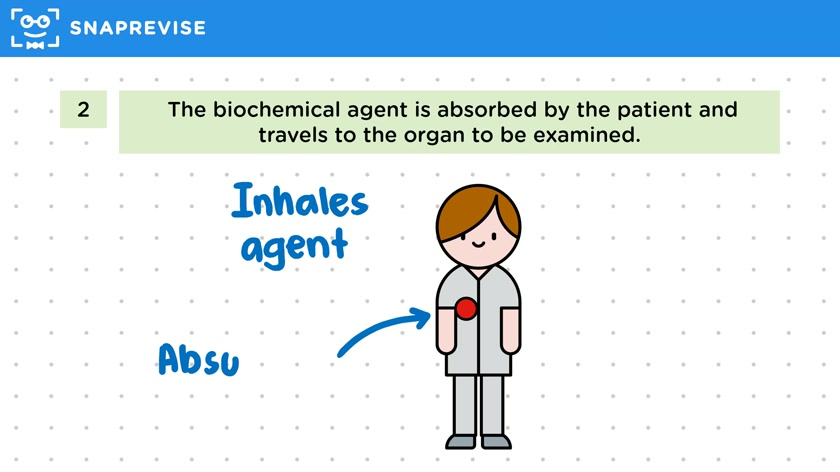
- The agent can enter the body via ingestion, inhalation, or injection, depending on the organ being examined.
- The radioactive isotope added to the agent should have a reasonable half-life and be a beta or gamma emitter.
- For examining lungs, the tracer is best inhaled by the patient.
- The tracer travels with air to the lungs and is absorbed by lung tissue.
- The radioactive source emits radiation from the organ to the outside of the body.
- Beta and gamma radiation pass through tissue and are detected to map the biochemical agent's location inside the body.
- Mapping the lung using radiation detected from different angles helps deduce the agent's location.
- Differences in radiation absorption between lungs can indicate potential problems.
- Understanding the basic process of using tracers is important for exams.
Please subscribe to access these revision notes.
This, and all other video notes, are included in our premium subscriptions.
Premium accounts get access to all videos and revision notes.
137
questions for Atomic structure
26
questions for Hazards and uses of radioactive emissions and of background radiation (physics only)