
GCSE Physics (AQA)
346 videos | 23 hours
Please subscribe to watch this video.
This, and all other videos, are included in our premium subscriptions.
Premium accounts get access to all videos.
Enable autoplay to keep watching
Your browser is blocking videos from playing automatically. To turn it back on:
Safari (Mac): Click the Safari menu item in the top bar, then Settings → Websites → Auto-Play, then set Auto-Play to Allow All Auto-Play for the current website.
Safari (iPhone/iPad): open the Settings app, then Apps → Safari → Auto-Play, and select Allow All Auto-Play.
Reaction Times
- Drivers have typical reaction times between 0.2 and 0.9 seconds.
- Reaction time is the time it takes for a driver to act and apply brakes when a danger appears.
- Reaction times vary due to factors such as age, health, special training, and lifestyle.
- Younger people generally have faster reactions than older people.
- Health issues, both temporary and long-term, can slow reaction times.
- Special training, like that of soldiers and athletes, can improve reaction times.
- Lifestyle factors, such as jobs or hobbies that require quick reactions, can affect reaction times.
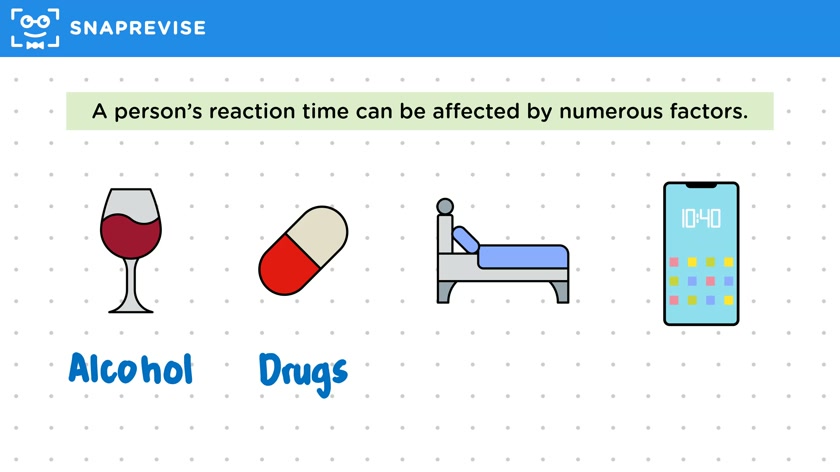
- Factors that can increase reaction time include alcohol, drugs, tiredness, and distractions.
- Alcohol and many drugs can slow brain functions, affecting reaction times.
- Tiredness can slow brain function and make concentration difficult.
- Distractions, such as phones or conversations, can delay hazard recognition and reaction.
- Drivers are advised to avoid driving under conditions that increase reaction times, as it increases thinking distance.
- Thinking distance is the distance traveled during the driver's reaction time, calculated using S = vt (where S is thinking distance, V is speed, and T is reaction time).
- Longer reaction times increase thinking distance, reducing the space available to brake and increasing the likelihood of accidents.
- Laws exist to prevent driving under conditions that increase reaction times to ensure safety.
Please subscribe to access these revision notes.
This, and all other video notes, are included in our premium subscriptions.
Premium accounts get access to all videos and revision notes.
153
questions for Forces
98
questions for Forces and motion