
GCSE Physics (AQA)
346 videos | 23 hours
Please subscribe to watch this video.
This, and all other videos, are included in our premium subscriptions.
Premium accounts get access to all videos.
Enable autoplay to keep watching
Your browser is blocking videos from playing automatically. To turn it back on:
Safari (Mac): Click the Safari menu item in the top bar, then Settings → Websites → Auto-Play, then set Auto-Play to Allow All Auto-Play for the current website.
Safari (iPhone/iPad): open the Settings app, then Apps → Safari → Auto-Play, and select Allow All Auto-Play.
Reflection & Colour
- Opaque objects reflect certain wavelengths of visible light and absorb others.
- An object is opaque if no visible light transmits through it.
- Light can be reflected or absorbed by opaque objects.
- Example: Orange fruit reflects orange light and absorbs blue light.
- The wavelength of visible light determines its color.
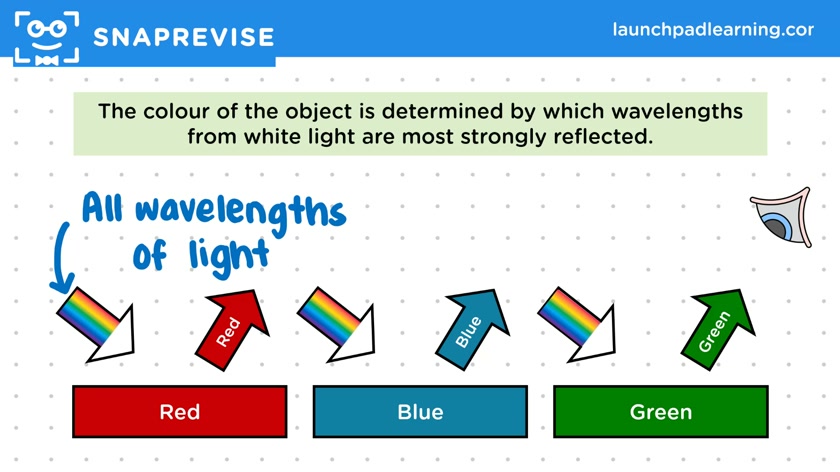
- The color of an object is determined by which wavelengths from white light are most strongly reflected.
- White light is a combination of all wavelengths of visible light.
- Surfaces reflect only the wavelengths of their color (e.g., red surface reflects red light).
- Our eyes detect reflected light rays, and our brains determine the color of the surface based on these rays.
- Surfaces can reflect multiple wavelengths at different intensities, resulting in different tones and shades.
- White objects reflect all wavelengths of visible light equally.
- Black objects absorb all wavelengths of visible light.
- White surfaces reflect white light, and black surfaces absorb all light, leaving no color indication.
- For exams, understand what determines the color of a surface, including special cases like white and black objects.
Please subscribe to access these revision notes.
This, and all other video notes, are included in our premium subscriptions.
Premium accounts get access to all videos and revision notes.
172
questions for Waves
81
questions for Electromagnetic waves