
GCSE Physics (AQA)
346 videos | 23 hours
Please subscribe to watch this video.
This, and all other videos, are included in our premium subscriptions.
Premium accounts get access to all videos.
Enable autoplay to keep watching
Your browser is blocking videos from playing automatically. To turn it back on:
Safari (Mac): Click the Safari menu item in the top bar, then Settings → Websites → Auto-Play, then set Auto-Play to Allow All Auto-Play for the current website.
Safari (iPhone/iPad): open the Settings app, then Apps → Safari → Auto-Play, and select Allow All Auto-Play.
Refraction & Wave Speed
- Refraction occurs due to waves changing speed at the boundary between two mediums.
- Refraction is a wave changing direction as it transmits across a boundary.
- Demonstration using a ripple tank with deep and shallow water shows wave peaks changing angle and wavelength decreasing.
- Waves slow down in shallow water, causing a change in direction.
- Waves approaching the boundary have the same speed.
- Wave fronts represent the peaks of the wave and indicate the direction of the wave.
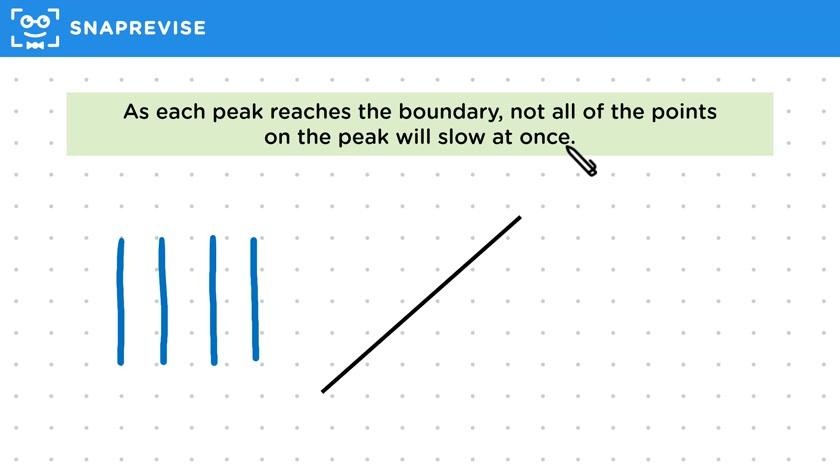
- As waves reach the boundary, not all points slow down simultaneously.
- Different points on the wave front reach the boundary and slow down at different times, changing the wave's direction.
- The speed of the waves is slower, and the direction changes after crossing the boundary.
- Waves initially travel perpendicular to wave fronts, and the angle change of wave fronts alters the wave's direction.
- Understanding this explanation is important for exams, and drawing diagrams may help with explanations.
Please subscribe to access these revision notes.
This, and all other video notes, are included in our premium subscriptions.
Premium accounts get access to all videos and revision notes.
172
questions for Waves
81
questions for Electromagnetic waves