
GCSE Physics (AQA)
346 videos | 23 hours
Please subscribe to watch this video.
This, and all other videos, are included in our premium subscriptions.
Premium accounts get access to all videos.
Enable autoplay to keep watching
Your browser is blocking videos from playing automatically. To turn it back on:
Safari (Mac): Click the Safari menu item in the top bar, then Settings → Websites → Auto-Play, then set Auto-Play to Allow All Auto-Play for the current website.
Safari (iPhone/iPad): open the Settings app, then Apps → Safari → Auto-Play, and select Allow All Auto-Play.
Resistance
- Resistance measures how much a component opposes current flow.
- Current consists of delocalized electrons slowed by collisions with positive ions.
- Resistance is measured in ohms, represented by the Greek letter omega.
- Greater resistance means more charge carriers are slowed, opposing current.
- All components have some resistance; some are designed specifically for it.
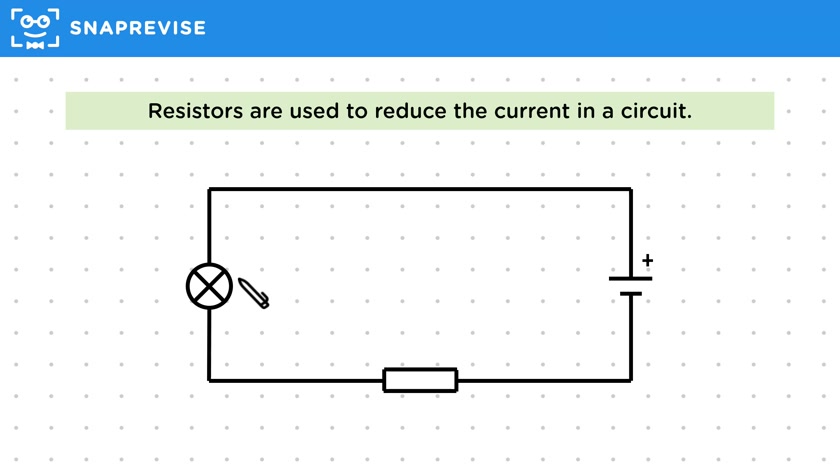
- Resistors are components designed to reduce currents deliberately.
- Fixed resistors have a set resistance value, which can change if overheated.
- Fixed resistors have colored stripes indicating resistance value.
- Circuit symbol for a fixed resistor is a rectangle.
- Resistors reduce current in circuits to prevent overheating or breaking components.
- Resistors can adjust current division in branching circuits or as conditions change.
- Variable resistors can change resistance, affecting current flow.
- Variable resistors have a high resistance conductor adjusted by a dial or slider.
- Circuit symbol for a variable resistor includes a diagonal arrow through it.
- Variable resistors adjust resistance and current in circuits dynamically.
- Used in circuits like dimmer switches to change lamp brightness without disconnecting components.
Please subscribe to access these revision notes.
This, and all other video notes, are included in our premium subscriptions.
Premium accounts get access to all videos and revision notes.
144
questions for Electricity
48
questions for Current, potential difference and resistance