
GCSE Physics (AQA)
346 videos | 23 hours
Please subscribe to watch this video.
This, and all other videos, are included in our premium subscriptions.
Premium accounts get access to all videos.
Enable autoplay to keep watching
Your browser is blocking videos from playing automatically. To turn it back on:
Safari (Mac): Click the Safari menu item in the top bar, then Settings → Websites → Auto-Play, then set Auto-Play to Allow All Auto-Play for the current website.
Safari (iPhone/iPad): open the Settings app, then Apps → Safari → Auto-Play, and select Allow All Auto-Play.
Solenoids
- A coil of current-carrying wire produces a magnetic field.
- Current traveling through a wire forms a circular magnetic field around it.
- Coiling the wire changes the magnetic field to resemble that of a bar magnet.
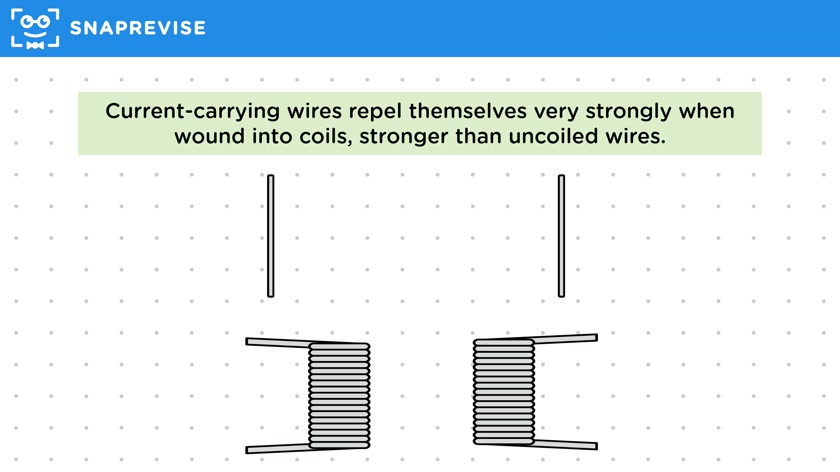
- Coiled wires repel themselves strongly, stronger than uncoiled wires.
- Wires can repel each other when their currents are in certain directions.
- The magnetic field of one wire causes the other to experience a force away from it.
- Demonstrates the difference in field strength between a wire and a solenoid.
- Identical wires with current move away slowly, indicating weak magnetic fields.
- Solenoids with current move quickly, indicating stronger forces and magnetic fields.
- Coiling wires increases magnetic field strength.
- Coils of wire are called solenoids.
- The term "solenoid" is derived from Greek, meaning "in the shape of a pipe."
- Important to know what a solenoid is, how it's made, and its usefulness.
- Solenoids are made by winding a wire into a circle and continuing to coil it.
- When current passes through, the magnetic fields from all coils overlap, creating a stronger field.
- Solenoids have many practical uses due to their strong magnetic fields.
Please subscribe to access these revision notes.
This, and all other video notes, are included in our premium subscriptions.
Premium accounts get access to all videos and revision notes.
99
questions for Magnetism and electromagnetism
41
questions for The motor effect