
GCSE Physics (AQA)
346 videos | 23 hours
Please subscribe to watch this video.
This, and all other videos, are included in our premium subscriptions.
Premium accounts get access to all videos.
Enable autoplay to keep watching
Your browser is blocking videos from playing automatically. To turn it back on:
Safari (Mac): Click the Safari menu item in the top bar, then Settings → Websites → Auto-Play, then set Auto-Play to Allow All Auto-Play for the current website.
Safari (iPhone/iPad): open the Settings app, then Apps → Safari → Auto-Play, and select Allow All Auto-Play.
Specific Heat Capacity of Water
- The specific heat capacity of water is 4,200 joules per kilogram degree Celsius.
- Water's heat capacity is much higher than that of metals (below 1000) and wood (around 2000).
- Water's high heat capacity has practical uses, such as:
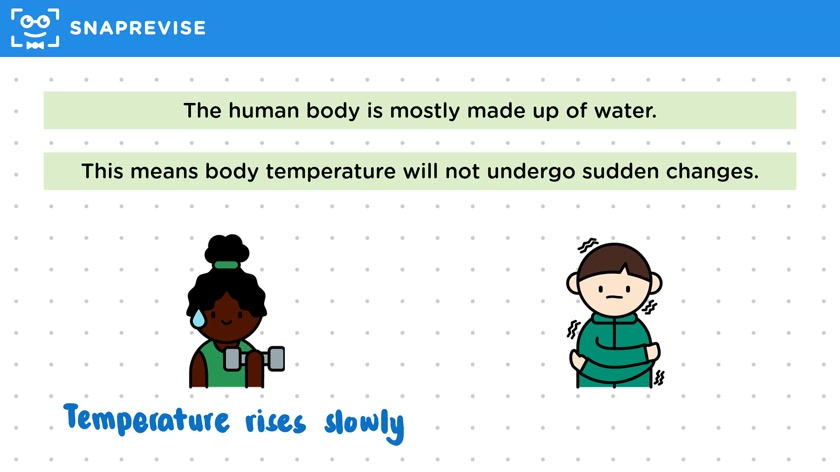
- Regulating body temperature, as the human body is about 60% water.
- Preventing sudden temperature changes during exercise, allowing time to cool down.
- Slowing heat loss in cold conditions, giving time to warm up before freezing.
- In homes, hot water is used in heating systems:
- Water is heated in a boiler and circulated through pipes and radiators.
- Water retains heat during transport, minimizing thermal energy loss.
- The high specific heat capacity of water aids in efficient heating systems by reducing heat loss.
- For exams, understanding the concept of water's high specific heat capacity is important, though specific applications may not need to be memorized.
Please subscribe to access these revision notes.
This, and all other video notes, are included in our premium subscriptions.
Premium accounts get access to all videos and revision notes.
99
questions for Particle model of matter
44
questions for Internal energy and energy transfers