
GCSE Physics (AQA)
346 videos | 23 hours
Please subscribe to watch this video.
This, and all other videos, are included in our premium subscriptions.
Premium accounts get access to all videos.
Enable autoplay to keep watching
Your browser is blocking videos from playing automatically. To turn it back on:
Safari (Mac): Click the Safari menu item in the top bar, then Settings → Websites → Auto-Play, then set Auto-Play to Allow All Auto-Play for the current website.
Safari (iPhone/iPad): open the Settings app, then Apps → Safari → Auto-Play, and select Allow All Auto-Play.
Stopping Distance
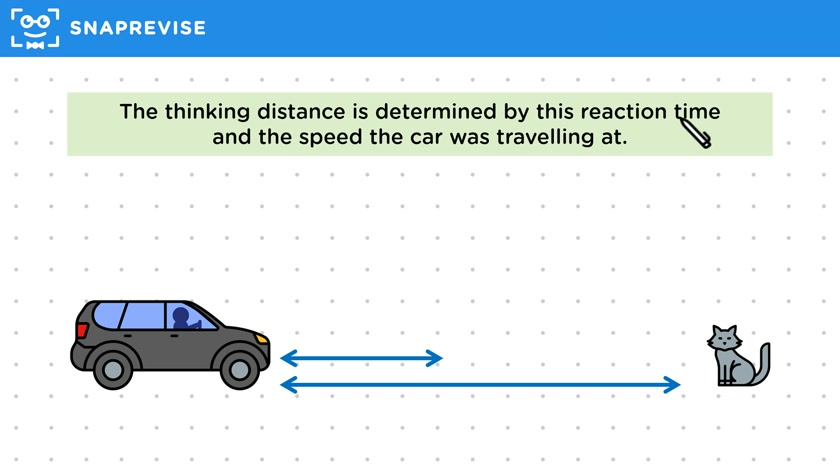
- Stopping distance is the total distance a car travels from the moment a need to stop appears until it actually stops.
- Stopping distance is determined by thinking and braking distances.
- Thinking distance is the distance traveled after a need to stop appears but before the brakes are applied.
- Braking distance is the distance traveled after the brakes are applied until the car stops.
- Reaction time is the time between the need to stop and the driver applying the brakes.
- Reaction time and the car's speed determine the thinking distance.
- To reduce thinking distance, one can drive at a slower speed or reduce reaction time.
- Braking involves applying a frictional force to the car's wheels, causing deceleration.
- The car continues to travel during deceleration, as speed decreases gradually, not instantly.
- It's important to define and differentiate between thinking, braking, and stopping distances for exams.
Please subscribe to access these revision notes.
This, and all other video notes, are included in our premium subscriptions.
Premium accounts get access to all videos and revision notes.
153
questions for Forces
98
questions for Forces and motion