
GCSE Physics (AQA)
346 videos | 23 hours
Please subscribe to watch this video.
This, and all other videos, are included in our premium subscriptions.
Premium accounts get access to all videos.
Enable autoplay to keep watching
Your browser is blocking videos from playing automatically. To turn it back on:
Safari (Mac): Click the Safari menu item in the top bar, then Settings → Websites → Auto-Play, then set Auto-Play to Allow All Auto-Play for the current website.
Safari (iPhone/iPad): open the Settings app, then Apps → Safari → Auto-Play, and select Allow All Auto-Play.
Stopping Distance Values
- The highway code provides estimates for stopping distances of an average car at different speeds.
- Stopping distance is the distance a car travels from when a hazard appears to when it stops.
- Stopping distance is divided into thinking distance and braking distance.
- Thinking distance increases by three meters for every 10 miles per hour increase in speed.
- Braking distance increases more significantly at higher speeds.
- Exam questions may involve estimating missing values from a table of stopping distances.
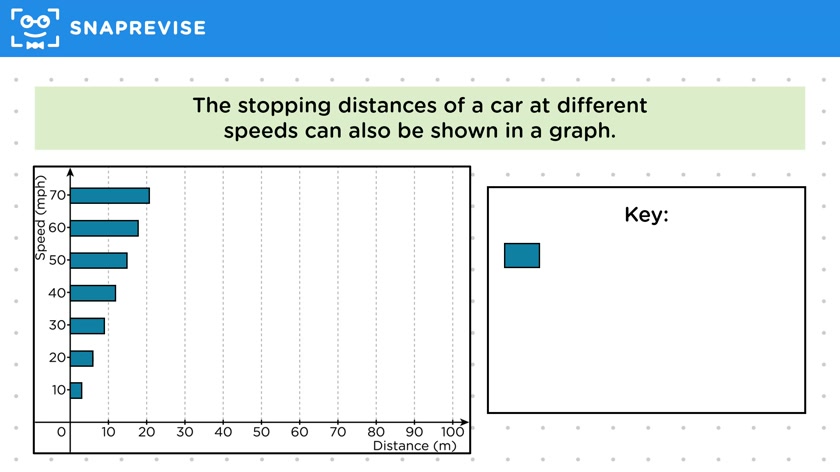
- Stopping distances can also be represented in a graph with speed on the vertical axis and distance on the horizontal axis.
- Graphs show thinking distances as rectangles and braking distances as pointed rectangles.
- The relationship between thinking distance and speed is linear, while the relationship between stopping distance and speed is not linear.
- Heavier vehicles, like lorries, require longer stopping distances than cars.
- A lorry traveling at 60 miles per hour has a stopping distance of around 180 meters, compared to a car's 73 meters.
- Lorries have the same thinking distance as cars but a much greater braking distance due to their larger mass.
- The highway code includes additional rules for larger vehicles to ensure safe stopping in emergencies.
Please subscribe to access these revision notes.
This, and all other video notes, are included in our premium subscriptions.
Premium accounts get access to all videos and revision notes.
153
questions for Forces
98
questions for Forces and motion