
GCSE Physics (AQA)
346 videos | 23 hours
Please subscribe to watch this video.
This, and all other videos, are included in our premium subscriptions.
Premium accounts get access to all videos.
Enable autoplay to keep watching
Your browser is blocking videos from playing automatically. To turn it back on:
Safari (Mac): Click the Safari menu item in the top bar, then Settings → Websites → Auto-Play, then set Auto-Play to Allow All Auto-Play for the current website.
Safari (iPhone/iPad): open the Settings app, then Apps → Safari → Auto-Play, and select Allow All Auto-Play.
Temperature of the Earth
- The Earth is heated by infrared radiation from the sun.
- Objects absorb infrared waves to gain heat and emit them to release heat.
- Nuclear fusion in the sun releases energy as electromagnetic waves, including infrared radiation.
- Infrared waves are the only way to transport heat from the sun through a vacuum to Earth.
- Without infrared waves, Earth would be too cold to support life.
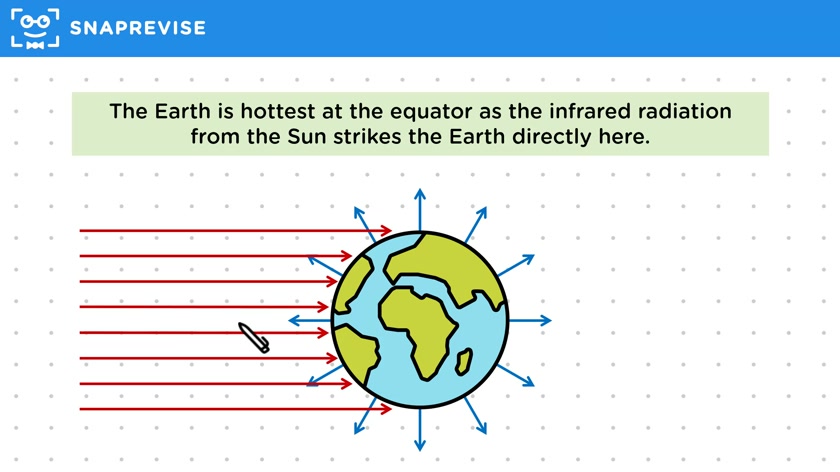
- The Earth emits its own heat as infrared radiation in all directions to prevent overheating.
- Earth and other planets are modeled as black bodies, good at absorbing and emitting radiation.
- All points on Earth's surface emit radiation at roughly the same intensity.
- The Earth releases some of the energy it gains, preventing constant temperature rise.
- The equator is hottest because the sun's infrared radiation strikes it directly.
- Infrared waves from the sun travel roughly parallel, affecting energy received by different Earth points.
- The equator receives more energy due to direct infrared wave impact.
- The North Pole receives less energy, making it colder.
- Temperature varies due to Earth's rotation, with cooler temperatures at night.
- The dark side of Earth releases radiation but gains none from the sun at night.
- During the day, Earth's surface receives and releases energy, while at night, it only releases energy.
- Temperature differences between day and night are due to the sun's illumination.
- Understanding these concepts is important for explaining Earth's surface temperature variations.
Please subscribe to access these revision notes.
This, and all other video notes, are included in our premium subscriptions.
Premium accounts get access to all videos and revision notes.
172
questions for Waves
19
questions for Black body radiation (physics only)