
GCSE Physics (AQA)
346 videos | 23 hours
Please subscribe to watch this video.
This, and all other videos, are included in our premium subscriptions.
Premium accounts get access to all videos.
Enable autoplay to keep watching
Your browser is blocking videos from playing automatically. To turn it back on:
Safari (Mac): Click the Safari menu item in the top bar, then Settings → Websites → Auto-Play, then set Auto-Play to Allow All Auto-Play for the current website.
Safari (iPhone/iPad): open the Settings app, then Apps → Safari → Auto-Play, and select Allow All Auto-Play.
The Doppler Effect
- The Doppler effect involves the change in wave frequency as a source moves towards or away from an observer.
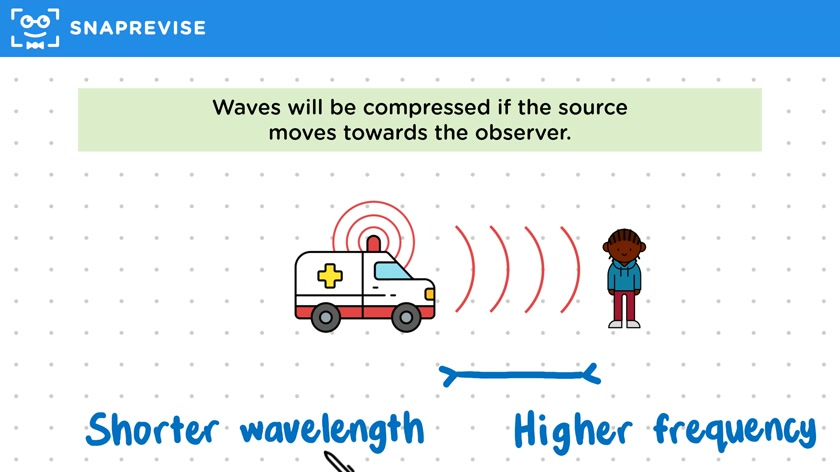
- Commonly experienced with the sound of an ambulance siren, which changes pitch as it approaches and passes by.
- Sound waves from the siren compress as the ambulance approaches, leading to a higher pitch.
- The compression of sound waves results in a shorter wavelength and higher frequency.
- As the ambulance moves away, the sound waves stretch, increasing the wavelength and decreasing the frequency, thus lowering the pitch.
- This effect is not limited to sound waves but applies to all types of waves, including light.
- Light from a star exhibits the Doppler effect as the star moves away, stretching the light's wavelength.
- Understanding the Doppler effect helps in studying the universe, as changes in the wavelength of light from stars provide information about their movement and distance.
Please subscribe to access these revision notes.
This, and all other video notes, are included in our premium subscriptions.
Premium accounts get access to all videos and revision notes.
61
questions for Space physics (physics only)
19
questions for Red-shift (physics only)