
GCSE Physics (AQA)
346 videos | 23 hours
Please subscribe to watch this video.
This, and all other videos, are included in our premium subscriptions.
Premium accounts get access to all videos.
Enable autoplay to keep watching
Your browser is blocking videos from playing automatically. To turn it back on:
Safari (Mac): Click the Safari menu item in the top bar, then Settings → Websites → Auto-Play, then set Auto-Play to Allow All Auto-Play for the current website.
Safari (iPhone/iPad): open the Settings app, then Apps → Safari → Auto-Play, and select Allow All Auto-Play.
The Motor Effect
- The motor effect occurs when a magnet and a current-carrying wire exert a force on each other.
- A magnetic field exists between two magnetic poles.
- Normally, this field affects other magnetic poles or certain magnetic metals.
- A wire carrying an electric current in the field will experience a force, even if made from non-magnetic metal like copper.
- The force causes the wire to move perpendicular to the field, not towards the poles.
- Newton's third law states that magnets will experience an equal and opposite force.
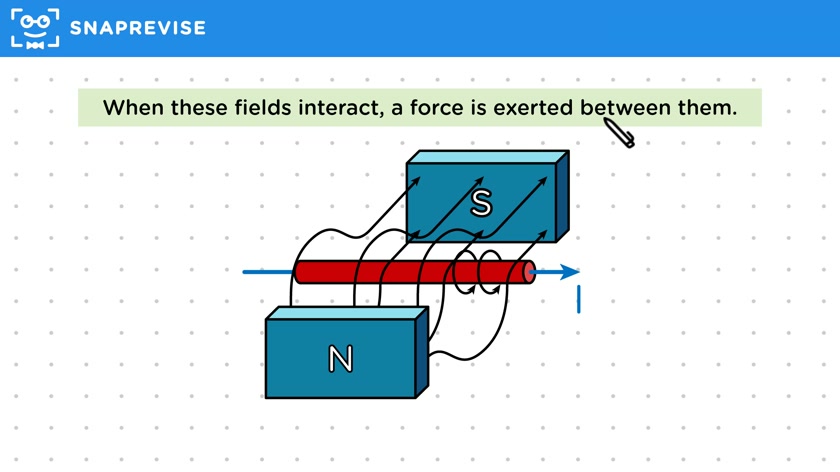
- A current-carrying wire produces a magnetic field, gaining a circular magnetic field.
- When placed near a magnet, the wire's field interacts with the magnet's field.
- The interaction results in a complex pattern where fields overlap and exert forces.
- Field lines indicate the direction of magnetic force; the force on the wire is up or down, not left or right.
- The force causes the wire and magnets to move apart, allowing fields to return to original patterns.
- For exams, recognize when a current-carrying wire will experience a force.
- 3D diagrams simplify to show only the current in the wire and the magnetic field.
- Diagrams use dot and cross notation to represent field direction (dot = out of page, cross = into page).
- In exams, interpret diagrams to identify if a motor effect would occur.
Please subscribe to access these revision notes.
This, and all other video notes, are included in our premium subscriptions.
Premium accounts get access to all videos and revision notes.
99
questions for Magnetism and electromagnetism
41
questions for The motor effect