
GCSE Physics (AQA)
346 videos | 23 hours
Please subscribe to watch this video.
This, and all other videos, are included in our premium subscriptions.
Premium accounts get access to all videos.
Enable autoplay to keep watching
Your browser is blocking videos from playing automatically. To turn it back on:
Safari (Mac): Click the Safari menu item in the top bar, then Settings → Websites → Auto-Play, then set Auto-Play to Allow All Auto-Play for the current website.
Safari (iPhone/iPad): open the Settings app, then Apps → Safari → Auto-Play, and select Allow All Auto-Play.
The Solar System
- The solar system consists of a star surrounded by planets.
- The central star is a huge ball of gases releasing energy through nuclear reactions.
- Planets of different sizes and compositions orbit the star at varying distances.
- The sun is the central star of our solar system, providing heat and light necessary for life on Earth.
- Eight planets orbit the sun, which has a large gravitational field due to its mass.
- Planets are bound by gravity, preventing them from being pulled into the sun.
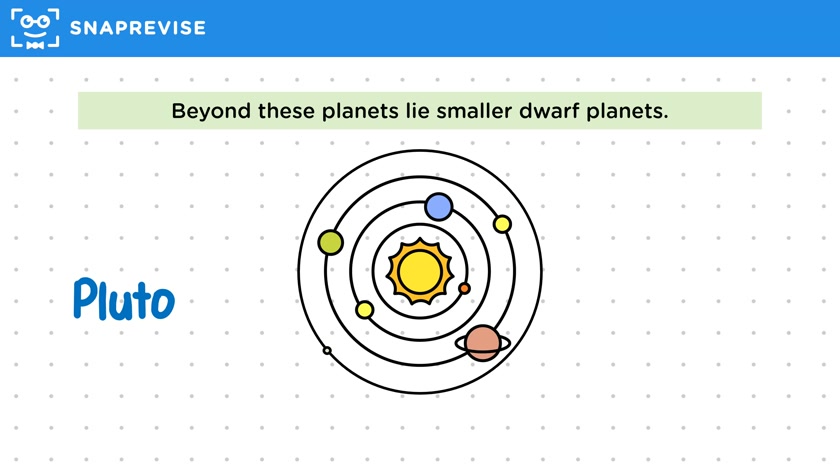
- Beyond the planets, there are smaller dwarf planets, with Pluto being the most famous.
- Pluto's classification as a planet or dwarf planet is debated.
- Natural satellites, like the moon, orbit planets rather than the sun.
- Artificial satellites are man-made objects orbiting planets.
- The solar system is part of the Milky Way galaxy, a spiral of stars, gas, and dust.
- The Milky Way contains thousands of star systems similar to ours.
- The universe contains hundreds of billions of galaxies, with the Milky Way being a small fraction.
- Our solar system is an even smaller part of the universe.
Please subscribe to access these revision notes.
This, and all other video notes, are included in our premium subscriptions.
Premium accounts get access to all videos and revision notes.
61
questions for Space physics (physics only)
42
questions for Solar system; stability of orbital motions; satellites (physics only)