
GCSE Physics (AQA)
346 videos | 23 hours
Please subscribe to watch this video.
This, and all other videos, are included in our premium subscriptions.
Premium accounts get access to all videos.
Enable autoplay to keep watching
Your browser is blocking videos from playing automatically. To turn it back on:
Safari (Mac): Click the Safari menu item in the top bar, then Settings → Websites → Auto-Play, then set Auto-Play to Allow All Auto-Play for the current website.
Safari (iPhone/iPad): open the Settings app, then Apps → Safari → Auto-Play, and select Allow All Auto-Play.
Types of Lens
- Lenses form images by refracting light.
- Refraction is the change in direction of waves when moving from one medium to another, like air to glass.
- Lenses can create images that appear different from the object.
- Magnifying glasses use lenses to enlarge images for detailed viewing.
- Microscopes use lenses for similar purposes.
- Binoculars and telescopes use lenses to make distant objects appear closer.
- Cameras and eyes use lenses to produce images for interpretation.
- Glasses use lenses to adjust light refraction for clearer images.
- Two main types of lenses: convex and concave.
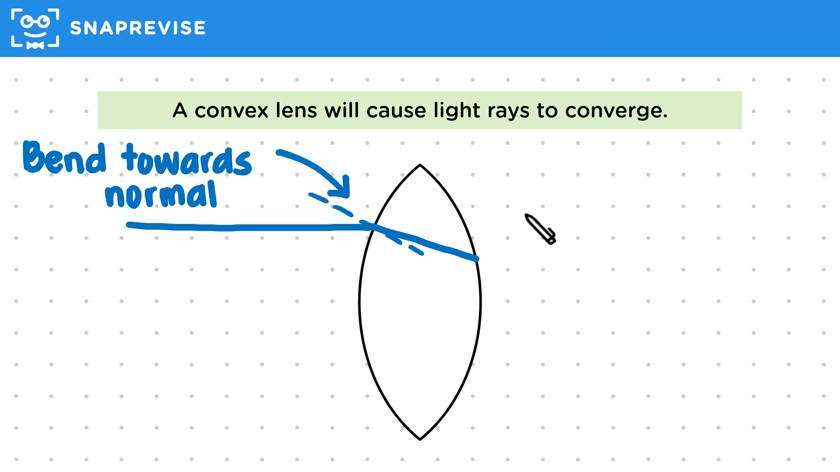
- Convex lenses cause light rays to converge.
- Convex lenses are symmetrical with circular curvature.
- Light slows down and bends towards the normal when entering a convex lens, then bends away when exiting.
- Convex lenses form images by converging parallel rays at a point.
- Concave lenses cause light rays to diverge.
- Concave lenses are symmetrical with inward curvature, forming a cave-like shape.
- Light bends towards the normal when entering a concave lens and away when exiting.
- Concave lenses do not converge rays; they diverge them.
- Images with concave lenses are formed by tracing paths back to a point on the initial side of the lens.
- Convex lenses make rays converge; concave lenses make them diverge.
Please subscribe to access these revision notes.
This, and all other video notes, are included in our premium subscriptions.
Premium accounts get access to all videos and revision notes.
172
questions for Waves
81
questions for Electromagnetic waves