
GCSE Physics (AQA)
346 videos | 23 hours
Please subscribe to watch this video.
This, and all other videos, are included in our premium subscriptions.
Premium accounts get access to all videos.
Enable autoplay to keep watching
Your browser is blocking videos from playing automatically. To turn it back on:
Safari (Mac): Click the Safari menu item in the top bar, then Settings → Websites → Auto-Play, then set Auto-Play to Allow All Auto-Play for the current website.
Safari (iPhone/iPad): open the Settings app, then Apps → Safari → Auto-Play, and select Allow All Auto-Play.
Ultrasound
- Ultrasound waves are sound waves beyond human hearing range.
- Sound waves are longitudinal waves created by vibrations in air or other matter.
- Human hearing ranges from 20 hertz to 20 kilohertz; ultrasound waves have frequencies above 20 kilohertz.
- Ultrasound waves have short wavelengths because they travel at the same speed as other sound waves but have higher frequencies.
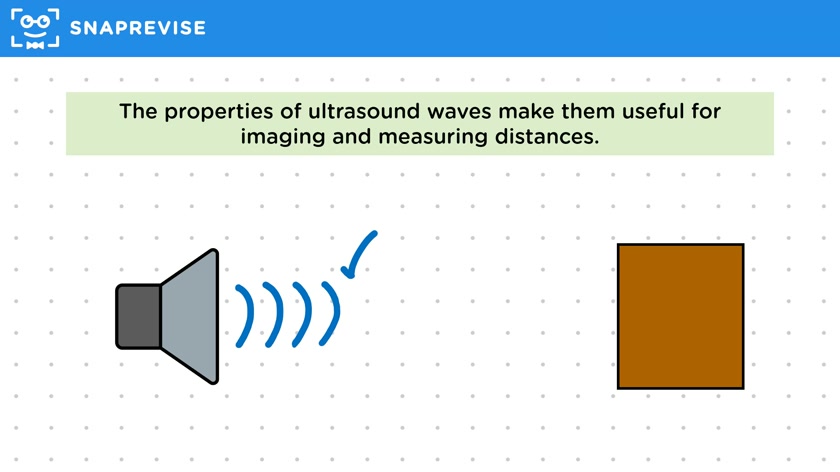
- Ultrasound is useful for imaging and measuring distances due to how the waves travel and behave at boundaries.
- Ultrasound distance measurement involves sending a thin ultrasound pulse toward an object, which reflects back.
- Distance to an object is calculated based on the time it takes for the ultrasound to return after reflection.
- The formula used is \(2S = vt\), where \(S\) is the distance to the object, \(v\) is the speed of sound, and \(t\) is the time taken for the ultrasound to travel to the object and back.
- Understanding this process is important for applications such as medical imaging and is a required knowledge area in GCSE exams.
Please subscribe to access these revision notes.
This, and all other video notes, are included in our premium subscriptions.
Premium accounts get access to all videos and revision notes.
172
questions for Waves
72
questions for Waves in air, fluids and solids