
GCSE Physics (AQA)
346 videos | 23 hours
Please subscribe to watch this video.
This, and all other videos, are included in our premium subscriptions.
Premium accounts get access to all videos.
Enable autoplay to keep watching
Your browser is blocking videos from playing automatically. To turn it back on:
Safari (Mac): Click the Safari menu item in the top bar, then Settings → Websites → Auto-Play, then set Auto-Play to Allow All Auto-Play for the current website.
Safari (iPhone/iPad): open the Settings app, then Apps → Safari → Auto-Play, and select Allow All Auto-Play.
Work on a Gas
- The pressure of a gas exerts an outward force against its container.
- Gas consists of particles moving randomly at high speed, spreading out in a container.
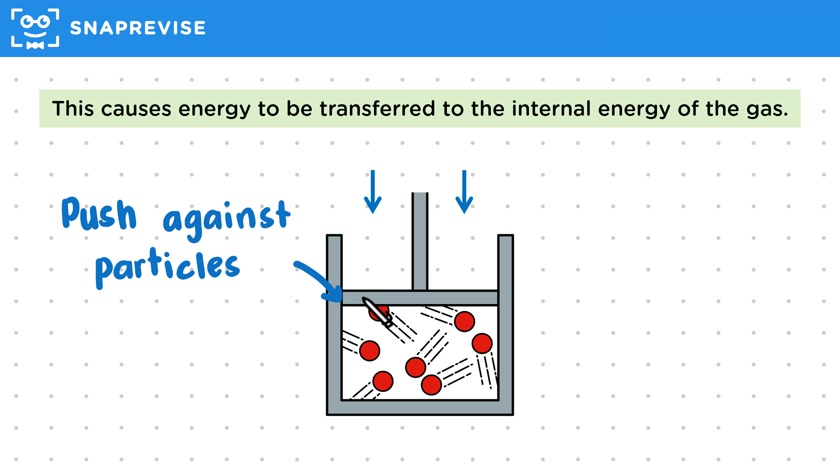
- Particles collide with the container walls, creating outward force or pressure.
- To compress a gas, work must be done against this force.
- Work involves forces causing a change in energy, either by moving an object or opposing a force.
- Compressing gas involves moving a press downwards against gas pressure.
- Doing work against gas pressure transfers energy to the gas's internal energy.
- Compressing gas increases particle speed, akin to a ball hit by a tennis racket.
- Increased particle speed raises kinetic energy and internal energy of the gas.
- Gas temperature is a measure of kinetic energy; increased kinetic energy raises temperature.
- Exams require explaining changes in internal energy and temperature due to work done and container wall movement.
- A common scenario: pumping a bicycle tire with a pump, where the pump end becomes hot.
- Pumping quickly does work against air pressure, heating the pump end.
- Work transfers energy to air's internal energy, increasing molecule speed and temperature.
- Pumping slowly may not show noticeable temperature change, allowing the pump to cool down.
Please subscribe to access these revision notes.
This, and all other video notes, are included in our premium subscriptions.
Premium accounts get access to all videos and revision notes.
99
questions for Particle model of matter
21
questions for Particle model and pressure