
“Results Day, Decoded: How to Turn Your GCSE Results into a Clear Plan” Q+A with Dr Peter Kim
Published on September 1st, 2026 by
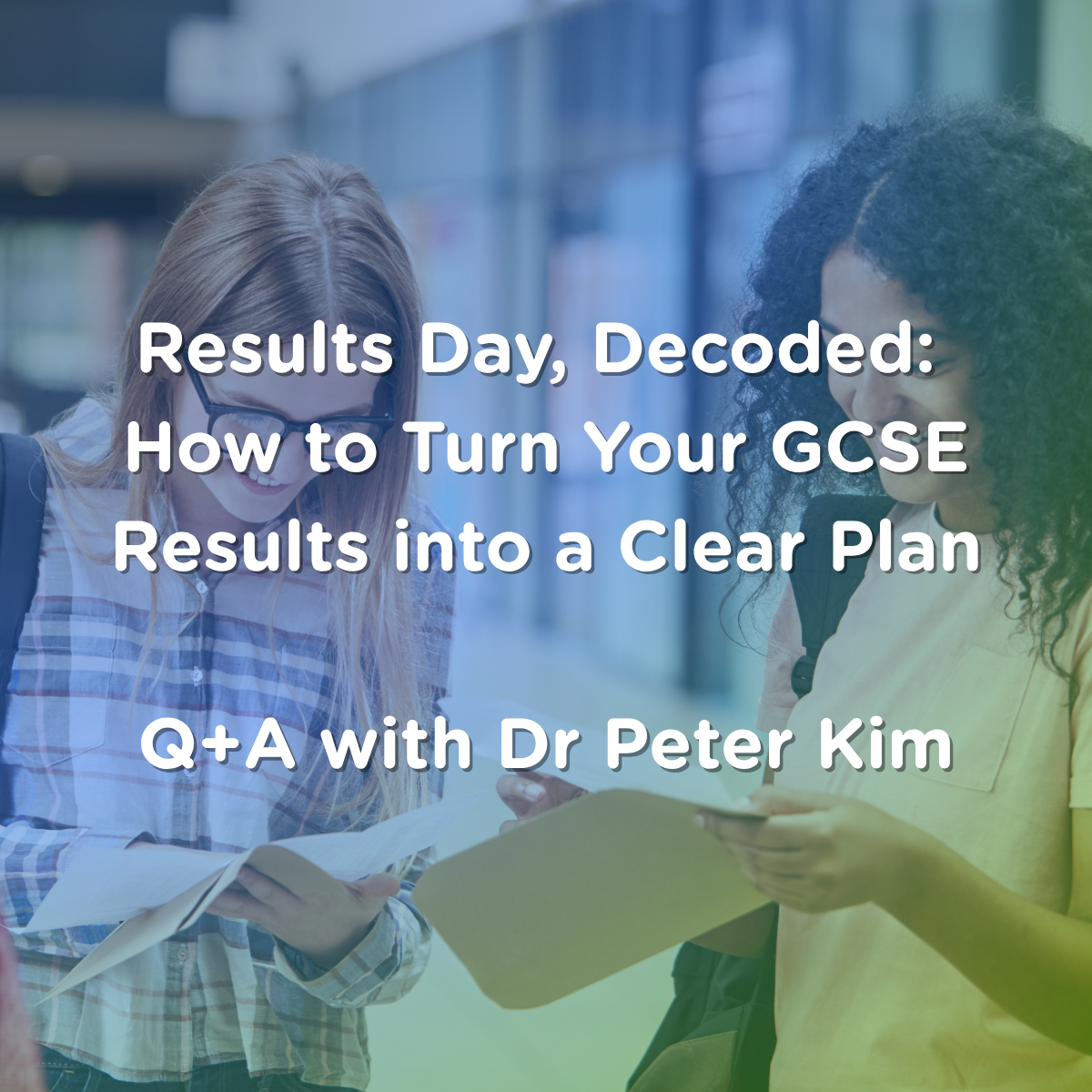
The night before GCSE Results Day 2026, we were joined in a live webinar by Dr Peter Kim, the founder of FutureMap and Veribera and a Cambridge-educated leading university admissions and career guidance specialist.
Through Veribera, Peter and his team have supported more than 400 students and accumulated over 1,000 university offers. He created FutureMap to combine this hands-on experience with insights from more than 500,000 real admissions outcomes, helping families make clearer, evidence-based decisions about courses, universities and careers.
Throughout the webinar, Peter answered questions about education itself, what students and their families can expect on Results Day, how to approach the numbers on the page and how to make informed decisions about the future. This is what he had to say.
Why does education matter to you?
PETER: "...You sit with a student who has decided that they are not a science person, and 6 months later, they're explaining something back to me that you have not thought of yourself. So, nothing about them has changed, but somebody just took them seriously. Most people are not short of ability, in my opinion, but they are short of that one person, or a few people, who have seen this before and will tell them the truth about it. And right now, the families who can afford that person get it, and everybody else just guesses. Most of what I do is just an argument with that."
What is one thing that you wish someone had told you at 16 that you want the students and families now to know?
PETER: "That nobody is coming with a plan. I was waiting for it. I assumed that there was a correct answer somewhere. That the adults had it, that the teachers had it, and if I behaved well enough, somebody would just give it to me. Nobody was holding it. What I wish somebody had said is this. Your job at 16 is not to choose your life, it is to keep open the doors you would regret closing, and then go and get properly interested in something. That is the whole main job. Because what actually frightened me was never the exams. It was the feeling that I was one wrong choice away from ruining everything. So, you're almost never one choice away from anything. That's how I've learned."
If someone is standing in their school on Result’s Day and doesn't know what to do next, is there one specific question that you wish that they would ask their school or their careers advisor?
PETER: "Ask this question: 'Given these grades, what would you do if you were me?'. Not, 'can I still do X?' or 'is this good enough?'. The people in front of you, a teacher or headteacher, whoever that person is, has done this every August for years, and knows exactly what situation you’re in. But nobody really asks this question because you're so tied up in this results thing. And one more question: 'were you surprised by this grade?'. It's another good question to ask, because sometimes, if you think that a grade is quite satisfactory, you don't normally ask any further questions. But it's always a good thing to ask, because teachers will tell you whether a review is worth chasing."
You’ve now seen more than 500,000 university application outcomes. Has there ever been any evidence which has made you completely change the advice that you were going to give someone?
PETER: "I would say yes, and it was uncomfortable. Because it meant that I was admitting something wrong. I used to believe that you could read an application from the outside. Everybody in this industry thinks that they can. Then you put half a million outcomes side by side, and you see how much of what you proudly call ‘good judgment’ is really pattern matching on the last 20 students. The other one was subject combinations. I had inherited a lot of wisdom about, you know, which ones look strong. Surprisingly, a lot of it's just folklore that everybody repeats and nobody really checks. So I say, in my experience, rather less now, ‘let us go and look’ is now a better stance. It's less impressive, because I'm not the one conjuring up magic. Like magic, I'm telling you what place to go and what subject to study, but I think this is now far more useful to a 16-year-old."
Our son’s mock exam results were not what we expected at all with such a range of scores from a 3 to 9 and I’m worried how we will deal with the situation if that happens tomorrow [results day] as the head of sixth form said he wouldn’t get in with those results. He has not considered any other path other than A levels.
PETER:
- "I would first ask how he felt after the final exam, because I think that's the most important thing, and then maybe you can discuss. If he does says he didn’t feel comfortable about certain subjects, then you can have a list of what those subjects are, just have a look. Everything is in context to what you want to do in life.
-
So, yeah, of course, if you get all 9, that's perfect, and that's wonderful, but if you get, let's say, a 3 in Religious Studies. Do you want to study that in A-level or at university? If you don't, then it doesn't matter, because universities are not going to look at your GCSE marks anyway, so it doesn't matter.
-
Now, if the question is then, perhaps, it's not a very good grade for the core subjects that I mentioned (Maths, English, and Sciences) then you have to think about maybe some other options, like thinking about going to a different sixth form.
-
If that's really important, that you have to study, let's say, Maths. If you're continuing on with your own school, and your GCSEs are not that great, at least the teachers know you, and therefore you can politely ask to stay on, saying “You know me, I will work hard.” … So, even though it may sound unconventional, we have tried a various number of techniques to allow the student to continue on.
-
So, that's what I would ask, but I think, more than anything, I think your son's confidence, how he feels today, how he feels tomorrow, is far more important than, as I said, what the grades will tell you."
Still stumped between choosing a BTEC equivalent to 3 a levels or actual a levels. The decision feels massive but I'm still so unsure? A-levels just feel more valuable. Any advice to help me choose?
PETER: "If your plan is to study in the UK, and study at a university in the UK, then I would not choose anything else but A-levels. So there are other courses, you know, like Foundation, Foundation, BTEC, Ivy, there are many out there, but… A-Level is the most fundamental. And it usually opens doors to the most universities and subjects, and therefore, I wouldn't think that BTEC would be an option, unless, again, BTEC is slightly easier. So, if you think, for whatever reason, that you would want to choose BTEC because you are not very good in this, or not very good in that, and you don't want to maybe stress too much out with A-levels, then maybe BTEC is your option. Otherwise, no."
You said “a good grade tells you that you can, it doesn't tell you that you should.” That really sums up something that so many people need to hear, but possibly aren't told at school. How can students tell the difference between a subject that they're good at, and a subject that they should actually be choosing?
PETER: "There is a test for that, and it only takes 10 seconds. Think about a lesson, not the grade. So, when that subject appears on your timetable on a wet Tuesday afternoon, what happens in your chest? A small lift, or a small sink? That is better data than your reports, because you cannot fake it, and nobody's marking it. So, being good at something at 16 often just means that you got a teacher who explained in a way that your brain works, and if you ever looked something up in that subject and nobody asked you to, that is the strongest signal you will ever get, because you're interested in it. One caution is that enthusiasm does not open doors on its own. Check what your direction requires as well, then inside that, choose the ones that make you lean forward."
My daughter is predicted 8/9 in all subjects, she loves maths and is wanting to do Chemistry, Biology and Maths. At the sixth form open day she was advised against further maths as her combination of A levels are quite intensive. Does this sound like correct advice?
PETER: "In terms of taking further maths, when you actually like maths, that's a no-brainer. Take it. Doesn't matter what the school says. I mean, I'm not saying dismiss what your teachers have been telling you. Of course, they know why they say it, because like I said, it's very intense, it's very difficult. However, if you enjoy it, then take it, and let's say in your AS level, so first year of A levels, if you feel that Maths is too much, then drop it."
A student was rejected from second choice for 6th Form because he put it as his second choice, but now thinking the course options at his second choice fit with him better. Can we ask them to reconsider that decision?
PETER: "If you still want to go there, for whatever reason, then yes, speak to them. Be honest and say that this has now become the first choice. But in the back of my mind, I don't know what school that is, but usually this doesn’t happen unless, because of the size of the school class, they have to get the numbers in."
What is one sentence that every student should remember when they open that envelope on the Results Day?
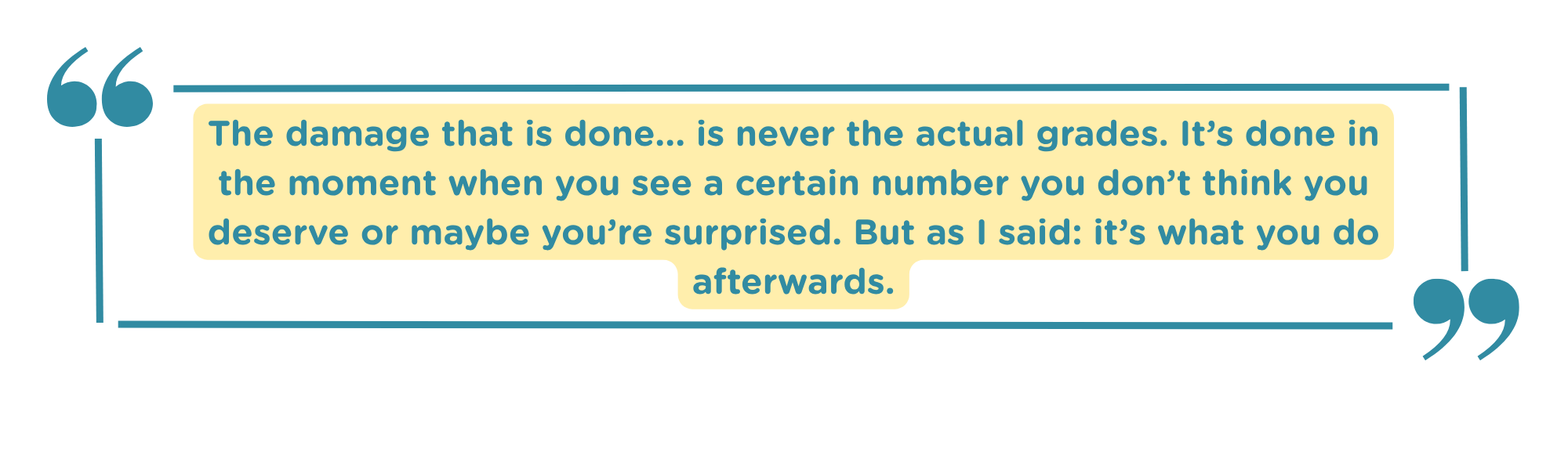
PETER: "Read the whole thing before you decide anything, or how you feel. Because… Usually, the damage that's done by tomorrow is never the actual grades. It's done in the moment when you see a certain number that you don't think that you deserve, or maybe you're surprised. But as I said: it's what you do afterwards. So, if it doesn't look good, have a sit-down, Have a cup of tea. And think about what you can do, the next steps, plan it out, because I want to stress this point, it really doesn't matter if your grades are not as you expect. Of course, you'll be hurt because of all the work that you've put in. And it may look like your plan, maybe your future plan is ruined, but as I told you, there is always a way, and it's never ruined."
Head to the ‘Webinars’ section of our Parent Hub on SnapRevise Digital to watch the recording, access other previous sessions, and register for all upcoming webinars. You can also download the slides through our ‘Downloads’ page.
More Articles

Back to School: How to Kickstart your child's GCSE or A-Level Year
The summer holidays are the perfect time for everyone to relax and cut loose: bedtimes get extended,...

Results Day Is Just the Beginning: What Happens Next?
Receiving GCSE or A-Level results is a major milestone, but it's not the end of the journey. Whether...

Life After Exams: Supporting Your Teen
When it comes to exam season, most of the focus rightly goes on the preparation and sitting of an ex...