
A-Level Psychology (AQA)
Topic Summaries
Biopsychology
The nervous system
The nervous system is separated into two divisions: the central nervous system and the peripheral nervous system.
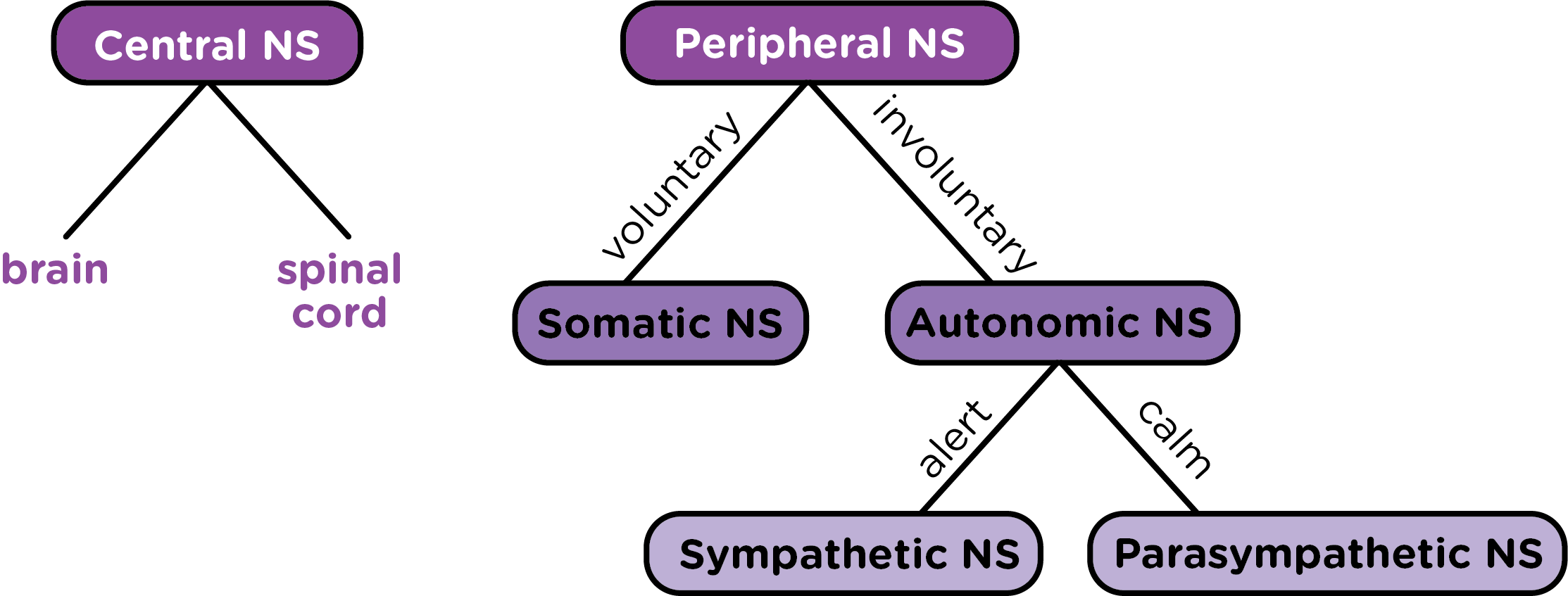
- The central nervous system:
- The brain: receives and process information from the senses. It contains our conscious awareness, imitates responses, stores memories, and generates emotions and thoughts.
- The spinal cord: conducts signals to and from the brain. It controls our reflex actions.
- The peripheral nervous system: sends messages to and from the central nervous system via neurons and is separated into two parts: the autonomic nervous system and the somatic nervous system.
- The autonomic nervous system: involuntary responses. This system only has motor pathways and doesn’t directly control effectors. It’s separated into the sympathetic branch and the parasympathetic branch:
- Sympathetic branch: the fight or flight response that prepares the body to confront a threat when stressed.
- Sympathetic branch: restores and conserves the body’s energy when relaxed or after a threat has passed.
- The somatic nervous system: voluntary movements. This system is made up of motor and sensory pathways, and it can control effectors directly.
- The autonomic nervous system: involuntary responses. This system only has motor pathways and doesn’t directly control effectors. It’s separated into the sympathetic branch and the parasympathetic branch:
Unlock The nervous system
Sign up to unlock the rest of this topic — plus every other topic, video, flashcard set and eBook guide in your SnapRevise Digital subscription.
Cancel anytime — instant access the moment you sign up.
Report an Issue
Spotted something wrong? Let us know and we'll take a look.