
GCSE Geography (Pearson IGCSE)
Topic Summaries
Fluvial landform processes
Fluvial landforms resulting from erosion
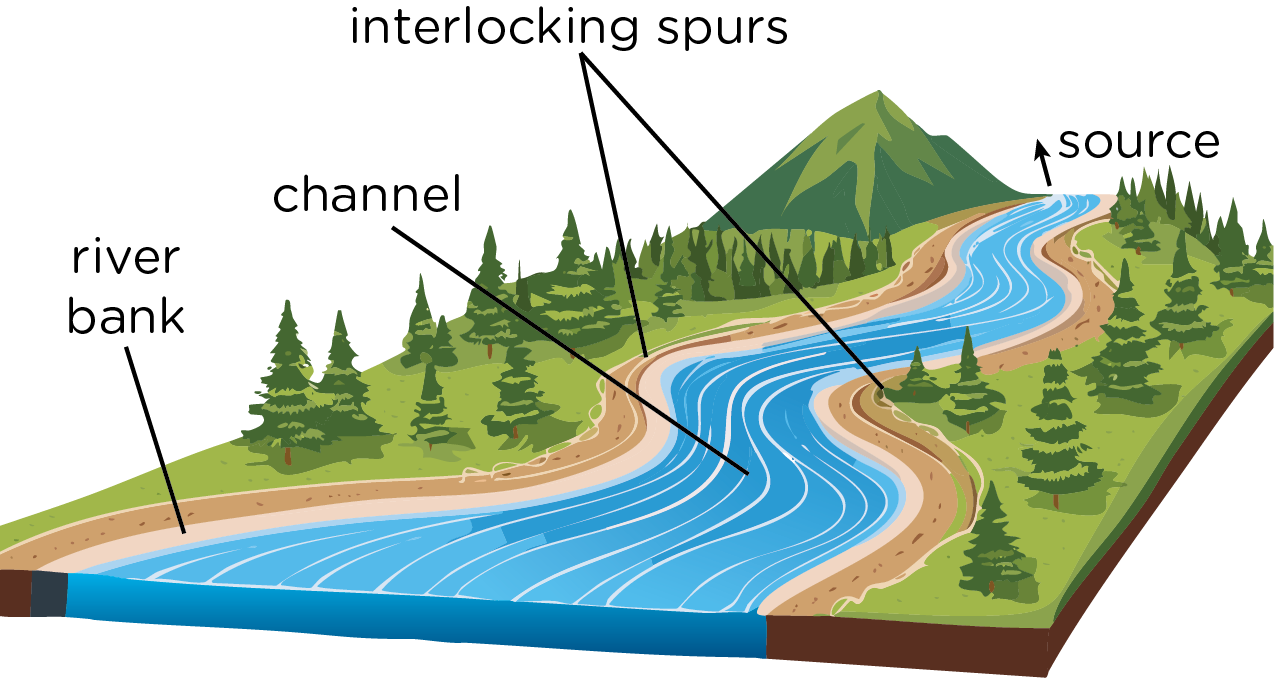
- Interlocking spurs: are found in the upper course of a river where the river flows around ridges of hard rock, creating a zig-zag pattern. Valleys are steep-sided and narrow, with a V-shaped profile, formed when:
- In the upper course, the river has low energy and erodes vertically through abrasion and hydraulic action.
- When the river meets hard, resistant rock, it cannot erode it easily.
- Instead, the river bends around the hard rock, leaving interlocking spurs of land that project into the valley.
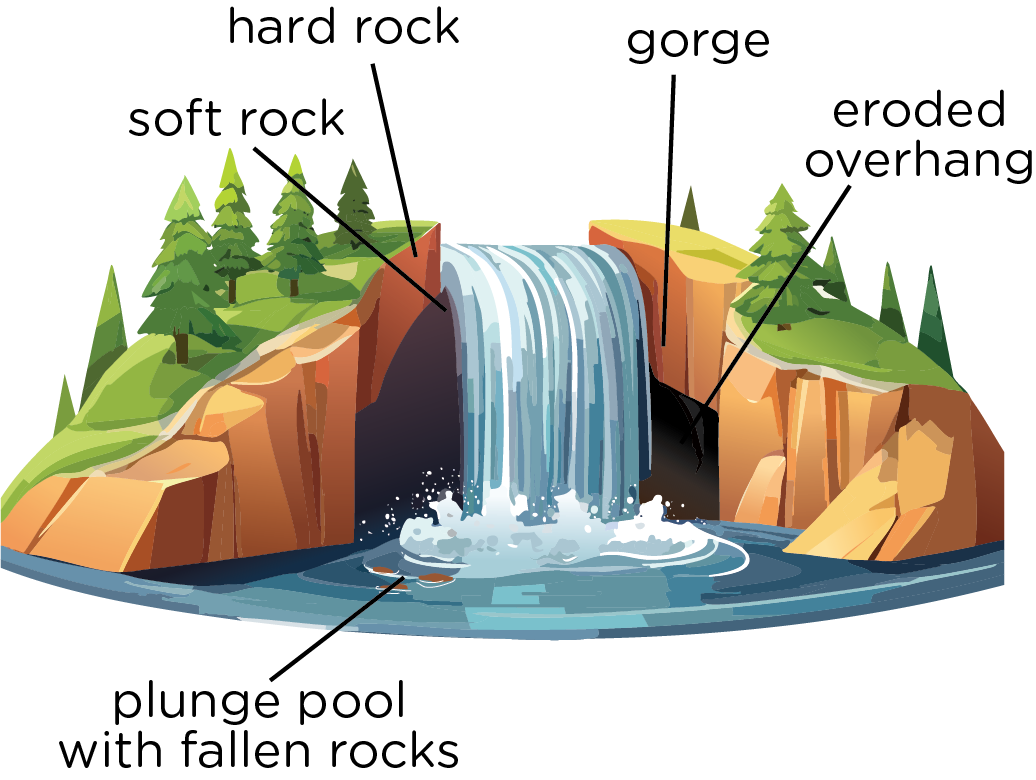
- Waterfalls and gorges: waterfalls are steep vertical drops in the river’s course, often with a plunge pool at the base. Gorges are narrow, steepsided valleys formed as waterfalls retreat upstream. They are formed when:
- A river flows over a band of hard, resistant rock that lies over soft rock.
- The soft rock is eroded faster due to abrasion and hydraulic action, creating an undercut beneath the hard rock.
- Over time, the hard rock becomes unsupported and collapses into the plunge pool.
- This process repeats, causing the waterfall to retreat upstream.
- The retreating waterfall leaves behind a steep-sided gorge.
Unlock Fluvial landforms resulting from erosion
Sign up to unlock the rest of this topic — plus every other topic, video, flashcard set and eBook guide in your SnapRevise Digital subscription.
Cancel anytime — instant access the moment you sign up.
Report an Issue
Spotted something wrong? Let us know and we'll take a look.