
GCSE History (OCR B)
Topic Summaries
Renaissance medicine
Renaissance doctors and medical professionals
- Physicians remained university-trained and focused on diagnosis.
- Barber surgeons: still a common choice for small operations like bloodletting for those who couldn’t afford physicians. However, surgeons became more respected due to improved training and scientific approaches.
- Apothecaries: still had little to no medical training, but sold a wider range of herbs and medicines.
- Quacks: travelling tradesmen who sold ‘cure-alls’ which were fake cures that exploited people’s fear of disease. They typically put on a show to attract patients.
- Wise women: used superstition to diagnose and cure illnesses through plants and herbs.
- Women: still cared for the sick at home.
Profile: Andreas Vesalius
- Vesalius was a professor of surgery in Padua, Italy. He was initially a key follower of Galen’s theories, but later questioned and opposed them.
- Unusually for the time, he conducted his own dissections, rather than leaving it to an assistant.
- Galen’s work was often based on animal dissections, rather than human, so Vesalius also dissected animals to evaluate Galen’s knowledge and correct some of his mistakes. For example, a human breastbone had three parts, not seven like an ape.
- Vesalius’ findings were made available to scholars and barber-surgeons in his illustrated textbook The Fabric of the Human Body. Unlike other books that focused on individual organs, Vesalius focused on how different systems worked within the body.
- He encouraged other doctors to do their own dissections, inspiring others like Fabricus who discovered valves in veins.
- Vesalius’ work overturned centuries of belief that Galen’s ideas of anatomy were correct. Whilst it did not lead to any new cures, it established a new basis for an understanding of the human body and made anatomy central to medical study
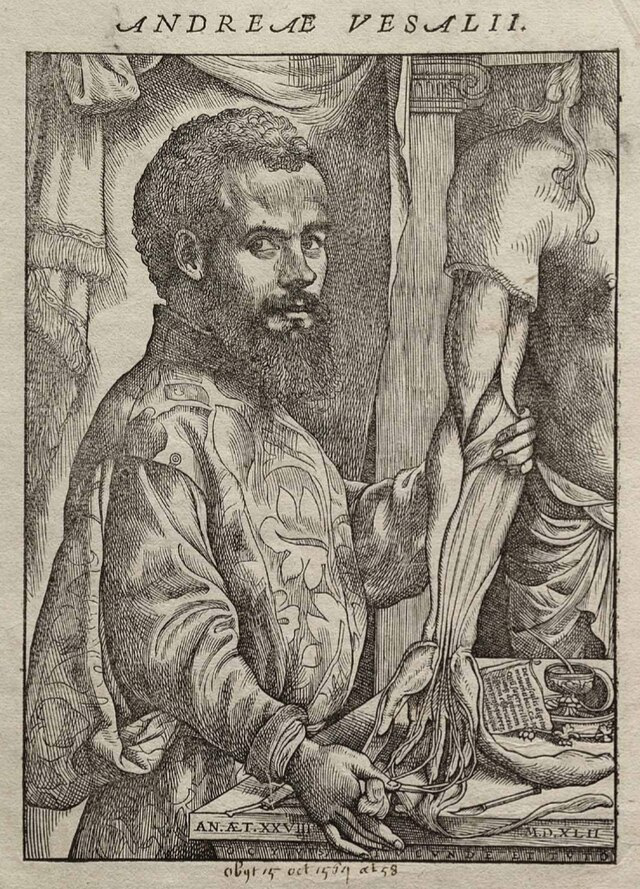
Andreas van Wezel
(b. 1514 d. 1564)
Profile: Ambroise Paré
- Paré was a French surgeon who worked on the battlefields during the Battle of Milan in 1536.
- He published several books about his work making surgery safer and less painful, though infection was still a major problem.
- Paré translated Latin works into French, increasing others’ understanding of anatomy, since most surgeons did not learn Latin.
- His books soon circulated across Europe. An English handwritten translation of his work was given to the Barber-Surgeons of London in 1591 long before it was printed in English in 1634.
- Some of Paré’s innovations were:
- Treating gunshots: surgeons previously believed gunshots were poisonous so used burning oil to remove the ‘poison’ and then apply a soothing cream. When Paré ran out of oil, he used rose oil, egg white, and turpentine which was a better ointment for wounds.
- Vascular ligature: instead of cauterising (burning) wounds with a red-hot iron, Paré used ligatures (thread) to tie off blood vessels and stop bleeding during surgery. He also designed the beak’s clamp to halt bleeding whilst the vessels were being tied.
- False limbs: due to the speed of amputations required on the battlefield, Paré designed his own limbs for wounded soldiers as an early form of prosthetic.
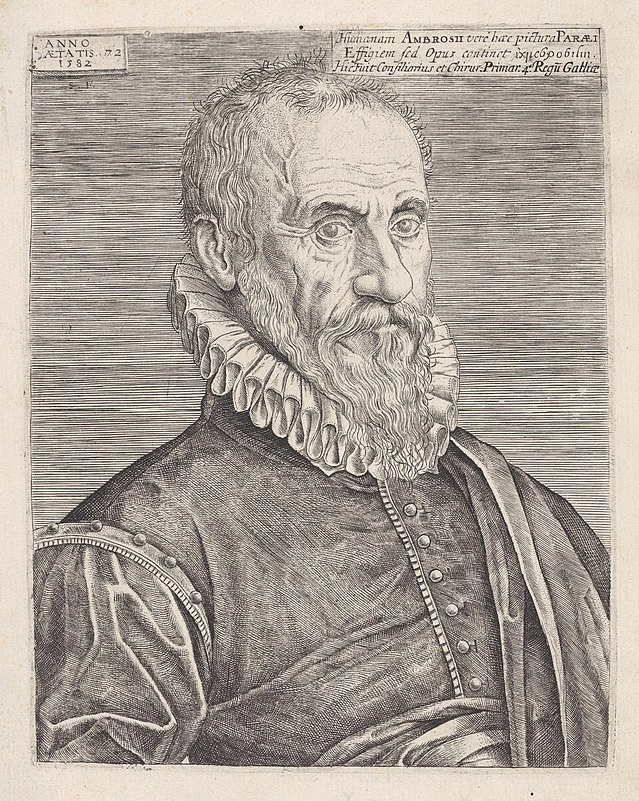
Ambroise Paré
(b. 1510 d. 1590)
Profile: Thomas Sydenham
- Sydenham worked as a doctor in London and was nicknamed the ‘English Hippocrates’ because he focused on carefully observing patients.
- He believed diseases were like different types of animals that could be grouped together.
- His book Observationes Medicae (1676) described his theories and his belief in treating the whole disease, not just symptoms.
- He did not rely on established ideas of medicine and instead prioritised his own observations of patients.
- He was the first to distinguish between measles and scarlet fever.
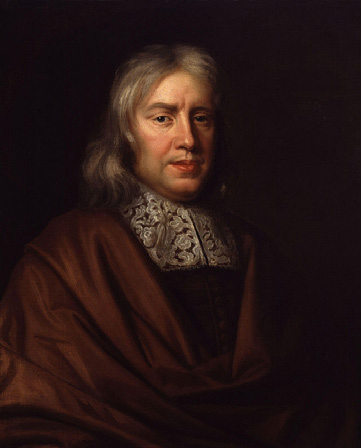
Thomas Sydenham
(b. 1624 d. 1689)
Profile: William Harvey
- Harvey challenged Galen’s ideas that blood was made in the liver and used as a fuel that was burned in the body.
- He demonstrated that blood circulates continuously around the body in a closed system, rather than being constantly produced and used up (although he could not explain why blood needed to circulate).
- He studied human hearts and dissected the hearts of cold-blooded animals to understand how muscles worked.
- He discovered the circulation of blood and proved that arteries and veins were one connected system. He also theorised that blood moves between arteries and veins through tiny passages (which today we know as capillaries).
- Harvey experimented by trying to pump blood the wrong way around, proving that blood could only go one way.
- He mathematically worked out how much blood would have been needed if it was produced as fuel for the body. By estimating blood volume and heart output, he proved that Galen’s model (blood being consumed by organs) was mathematically impossible
- However, he could not explain how the blood moved from arteries to veins (as microscopes at the time weren’t powerful enough to view capillaries).
- Early experiments based on his ideas sometimes led to deaths due to shock or wrong blood types.
- He knew that if he were right, he would be challenging medical ideas of humours and bloodletting, so his ideas were slow to be accepted.
- Harvey’s work was published in 1628, and the immediate response was critical. Some doctors rejected his ideas for contradicting Galen, and many viewed him as a quack. It took another 50 years before the University of Paris taught his findings to students.
- Harvey’s discovery was not immediately useful, but in the long term, the circulation of blood was key to understanding modern medicine, conditions like diabetes or heart disease, and innovations like blood tests.
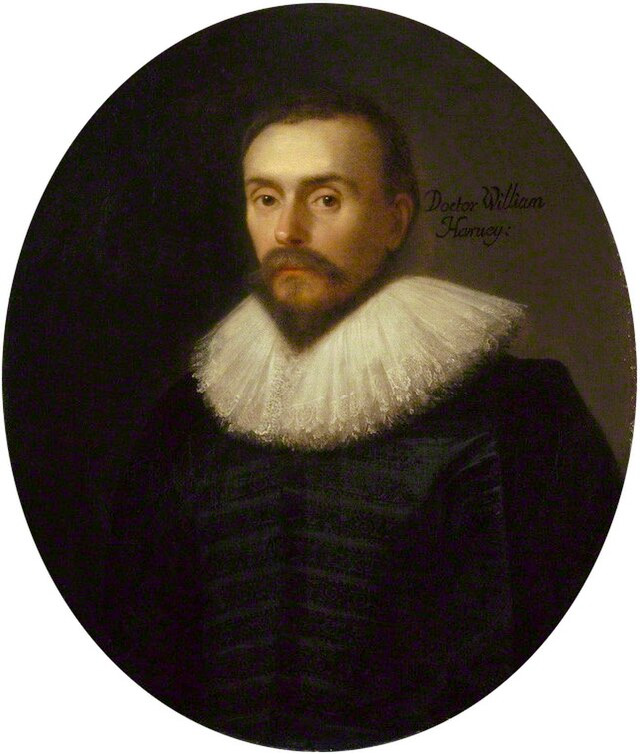
William Harvey
(b. 1578 d. 1657)
Profile: John Hunter
- John Hunter was a Scottish surgeon and highly distinguished physician and researcher.
- At the age of 20, Hunter joined his brother’s anatomy school where he began a large collection of 3000 stuffed or dried body parts, plants and fossils. He used his collection to experiment with inflating narrow blood vessels.
- In 1785, when a man entered the hospital with an aneurysm above the knee, Hunter challenged the usual treatments. Rather than amputating the leg, Hunter cut at several points of the leg and tied his arteries together to restrict his blood flow above the aneurysm. Six weeks later, the patient was able to walk again.
- He even experimented on himself by injecting himself with gonorrhoea pus to test if two diseases could exist in the same organ. Unbeknownst to him, the patient also had syphilis, infecting Hunter with two diseases.
- Many surgeons whom Hunter trained became great medical professionals (e.g. Edward Jenner, who invented vaccinations).
- Hunter’s willingness to experiment was key to his success as a surgeon, and his writings were an important contribution to surgical work and helped to make other discoveries.
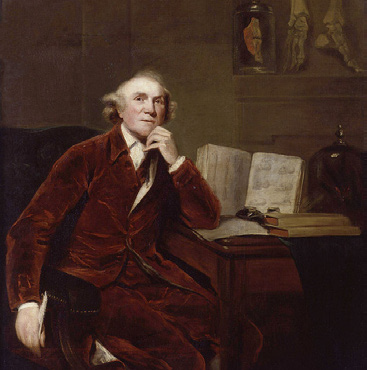
John Hunter
(b. 1728 d. 1793)
Profile: Antonie van Leeuwenhoek
- van Leeuwenhoek was the first person to observe and describe microorganisms using microscopes he designed himself.
- He discovered bacteria, protozoa, sperm cells, and red blood cells.
- His observations laid the foundations of microbiology as a scientific discipline, providing crucial early evidence that living organisms could exist beyond human sight.
- His work challenged existing medical beliefs that were based on limited anatomical knowledge.
- Later scientists, including Pasteur and Koch in the industrial era, built directly on his discoveries in developing germ theory and modern understanding of disease transmission
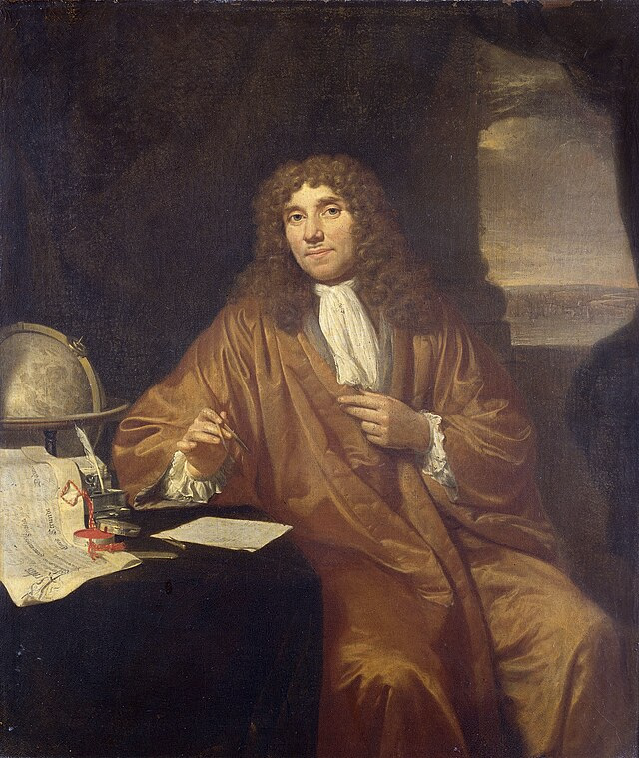
Antonie van Leeuwenhoek
(b. 1632 d. 1723)
Unlock Renaissance doctors and medical professionals
Sign up to unlock the rest of this topic — plus every other topic, video, flashcard set and eBook guide in your SnapRevise Digital subscription.
Cancel anytime — instant access the moment you sign up.
Report an Issue
Spotted something wrong? Let us know and we'll take a look.