
GCSE Physics (Pearson IGCSE)
Topic Summaries
Absorbing and emitting infrared radiation
Temperature change and radiation (HT ONLY)
- If an object is at a constant temperature, then it is absorbing and emitting radiation at the same rate:
- If it absorbs radiation faster than it can emit, then its temperature is rising, such as with an ice cube in a warm room.
- If it emits radiation faster than it can absorb, then its temperature is decreasing, such as with a lump of hot coal in a cool room.
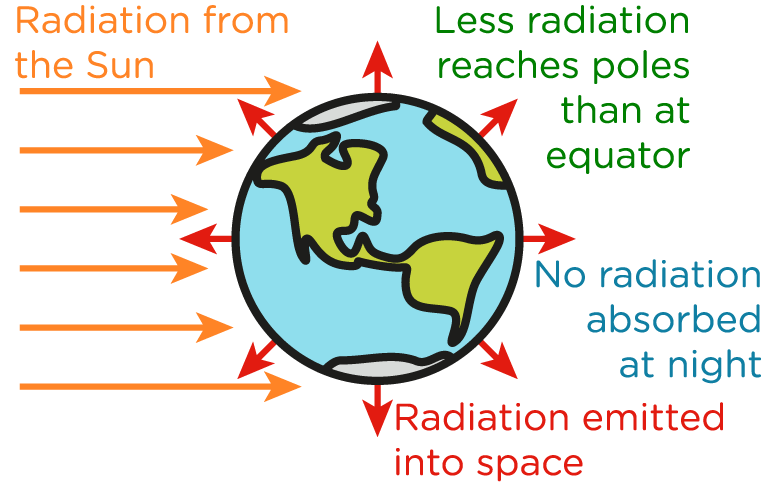
- The temperature of the Earth depends on how it absorbs radiation from the sun and re-emits it into space.
- One side of Earth is facing the Sun, so it absorbs a lot of radiation. The other side faces away from the Sun, so it doesn’t absorb any radiation but is still emitting it. So, the Earth’s surface warms up during the day and cools at night.
- Less radiation is incident to the Earth at its poles than on the equator. This is why the equator is very hot and the poles are very cold.
Unlock Temperature change and radiation (HT ONLY)
Sign up to unlock the rest of this topic — plus every other topic, video, flashcard set and eBook guide in your SnapRevise Digital subscription.
Cancel anytime — instant access the moment you sign up.
Report an Issue
Spotted something wrong? Let us know and we'll take a look.