
GCSE Maths (Edexcel)
435 videos | 33 hours
Please subscribe to watch this video.
This, and all other videos, are included in our premium subscriptions.
Premium accounts get access to all videos.
Enable autoplay to keep watching
Your browser is blocking videos from playing automatically. To turn it back on:
Safari (Mac): Click the Safari menu item in the top bar, then Settings → Websites → Auto-Play, then set Auto-Play to Allow All Auto-Play for the current website.
Safari (iPhone/iPad): open the Settings app, then Apps → Safari → Auto-Play, and select Allow All Auto-Play.
Geometry and Measures
Mensuration and Calculation
Defining Surface Area
1:40
Surface Area
Spec
G14
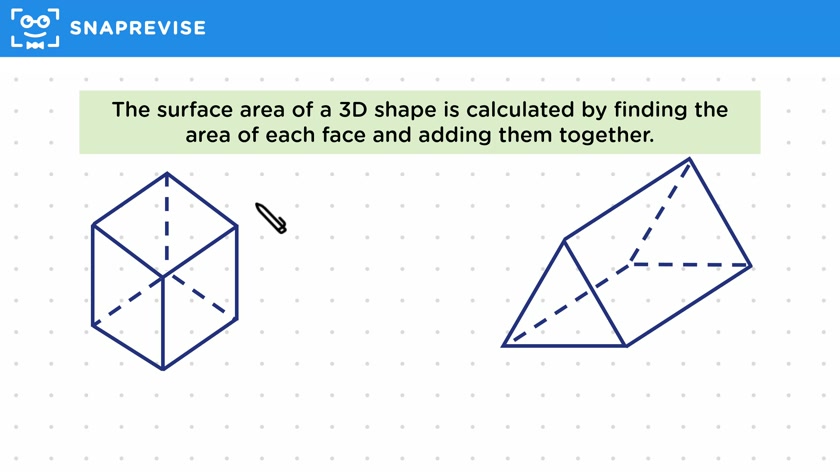
- Surface area is the total area of the faces of a 3D object
- It only considers the 2D surfaces of the 3D shape
- All faces, including obscured ones, should be included in the calculation
- Surface area is calculated by finding the area of each face and adding them together
- A cube has six square faces, so its surface area is the sum of the areas of six squares
- A triangular prism has two triangular end faces and three rectangles joining them, so its surface area is the sum of the areas of two triangles and three rectangles
- Some 3D shapes may have curved surfaces, which also need to be included in the surface area calculation
- Surface area is measured in square meters, as it is still an area measurement
Please subscribe to access these revision notes.
This, and all other video notes, are included in our premium subscriptions.
Premium accounts get access to all videos and revision notes.
Report an Issue
Spotted something wrong? Let us know and we'll take a look.